Ibiza — a 572 square kilometre island in the western Mediterranean, the third-largest of the Balearic Islands, 150km east of Valencia — has a global reputation that extends far beyond its actual size: as the world's pre-eminent electronic music and nightclub destination (Space, Pacha, DC10, Amnesia, Privilege — the last holding 10,000 people, the world's largest club — host the DJs who define contemporary dance music for the six months of summer), as a hideaway for celebrities, the fashion industry and the international ultra-wealthy, and, increasingly for those who look beyond the beach club surface, as an island of extraordinary natural beauty, a UNESCO-listed Phoenician archaeological heritage, and a distinct ibicenco culture of remarkable depth and resilience. The island's Dalt Vila (the fortified old town of Ibiza Town, its Renaissance walls enclosing a medieval settlement of winding streets, whitewashed houses and a 14th-century cathedral) is a UNESCO World Heritage Site that most club-goers walk past without entering — an extraordinary oversight, as the fortifications are among the finest Renaissance military architecture in Spain.
Formentera — the tiny island 7km south of Ibiza (20 minutes by ferry from Ibiza Town), with a population of 12,000 and no airport — is the finest beach destination in the Balearics and one of the finest in the western Mediterranean: 35km of crystalline turquoise water beaches (the Ses Illetes beach, a sand spit extending into the Formentera lagoon, has water clarity exceeding 20 metres), a gentle landscape of salt flats and pine forest entirely free of high-rise development, and an atmosphere of sophisticated calm that makes it the preferred destination of those who could afford anywhere else in Europe.
Dalt Vila & Ibiza Town
Dalt Vila — the fortified upper town of Ibiza Town (Eivissa), its 16th-century Renaissance walls (built by Philip II's military engineer Giovanni Battista Calvi to protect the island from Barbary pirate raids) enclosing a dense medieval settlement of rising streets, whitewashed houses and the Gothic Cathedral of Santa Maria de las Nieves — is the cultural and historical heart of Ibiza and, for visitors with interest beyond the beach clubs, its most rewarding experience. The Dalt Vila Archaeological Museum (Museu d'Arqueologia d'Eivissa i Formentera) has an excellent collection of Phoenician material from the Puig des Molins necropolis (2,500 Phoenician burials, one of the most important Phoenician sites in the western Mediterranean; separately ticketed at €2.50). The view from the cathedral terrace (or from the Baluard de Sant Bernat on the southern wall) across the Ibiza harbour, the marina and the island of Formentera beyond is one of the finest coastal panoramas in the Balearics. The Sa Penya and La Marina districts below Dalt Vila — the most traditional quarters of Ibiza Town, now heavily oriented towards the bar-and-boutique market — have the island's finest independent restaurants and bars at ground level.
Ses Salines & the Finest Beaches
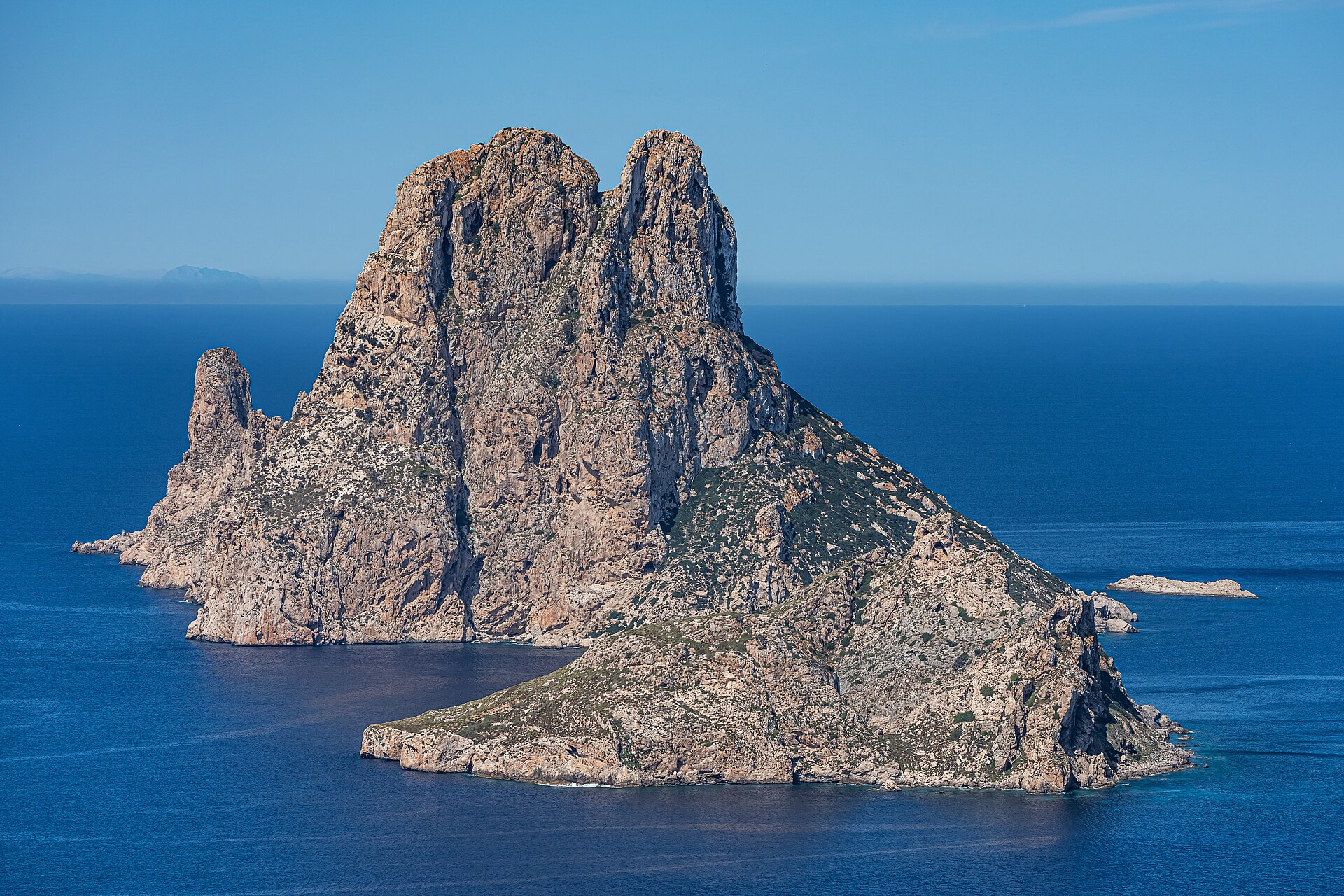
Ses Salines — a natural park in the south of Ibiza encompassing the salt flats (salines) used since the Phoenician period, the dunes and pine forests behind the coast, and the finest beach on Ibiza (Platja de Ses Salines, a narrow strip of white sand and turquoise water with two excellent beach bars, the most fashionable sunbathing venue in the Balearics) — is the best reason to escape the northern resort strip. Cala d'Hort (west coast, 30 minutes from Ibiza Town) has the most dramatic beach scenery on the island: a sheltered cove with the extraordinary rocky island of Es Vedrà (a sea stack of 382 metres rising vertically from the sea, the subject of local mythology connecting it to the Mahabharata, the sirens and the lost city of Atlantis) directly offshore. The ferry from Ibiza Town to Formentera (La Savina dock, 20–30 minutes depending on operator, approximately €25 return) departs regularly from 7am; rent a bicycle on arrival in Formentera for the finest experience of the island.
The Nightlife & When to Go
Ibiza's nightclubs — which open from midnight and continue until noon the following day, with main acts taking the stage at 3–5am — operate from approximately May to October, with July and August the peak months for headline acts. The club geography divides between the San An (Sant Antoni) strip (more tourist-oriented, cheaper entry, the main British and German party area) and the Ibiza Town/Playa d'en Bossa area (the flagship venues — Ushuaïa, Hï Ibiza, Pacha — attract the most celebrated DJs at the highest prices: entry €50–80, drinks €15–25). The DC10 club in the Salinas road (Monday morning Circoloco parties, the most legendary weekly party in the world) is in a class apart from the commercial club strip. Visiting Ibiza outside the club season (November–April) reveals the island at its quietest and most beautiful: the landscape, the old town, the Ses Salines natural park and the food scene are all considerably more accessible without the summer crowd, and prices are dramatically lower.