The Canary Islands — an autonomous community of Spain consisting of seven main islands (Tenerife, Gran Canaria, Lanzarote, Fuerteventura, La Palma, La Gomera and El Hierro) in the Atlantic Ocean 100–500km off the north-west African coast — are the most visited holiday destination for UK holidaymakers in Europe, year after year: a combination of guaranteed sunshine throughout the year (the trade wind climate ensures temperatures of 18–24°C even in January and February, making them unique among European destinations for genuine all-year beach appeal), extraordinary volcanic landscapes of world-class geological importance, and a well-developed resort infrastructure that has been hosting British visitors since the 1960s. The islands' volcanic character — the Canaries sit on the African tectonic plate above a mantle hotspot that has generated seven distinct volcanic islands — produces landscapes of dramatic geological variety: from the white sand dunes of Maspalomas in Gran Canaria (a miniature Sahara 100km from the African coast) to the 2,300-year-old lava fields of Timanfaya in Lanzarote (the 1730–1736 eruption that covered a third of the island in lava is recent by geological standards).
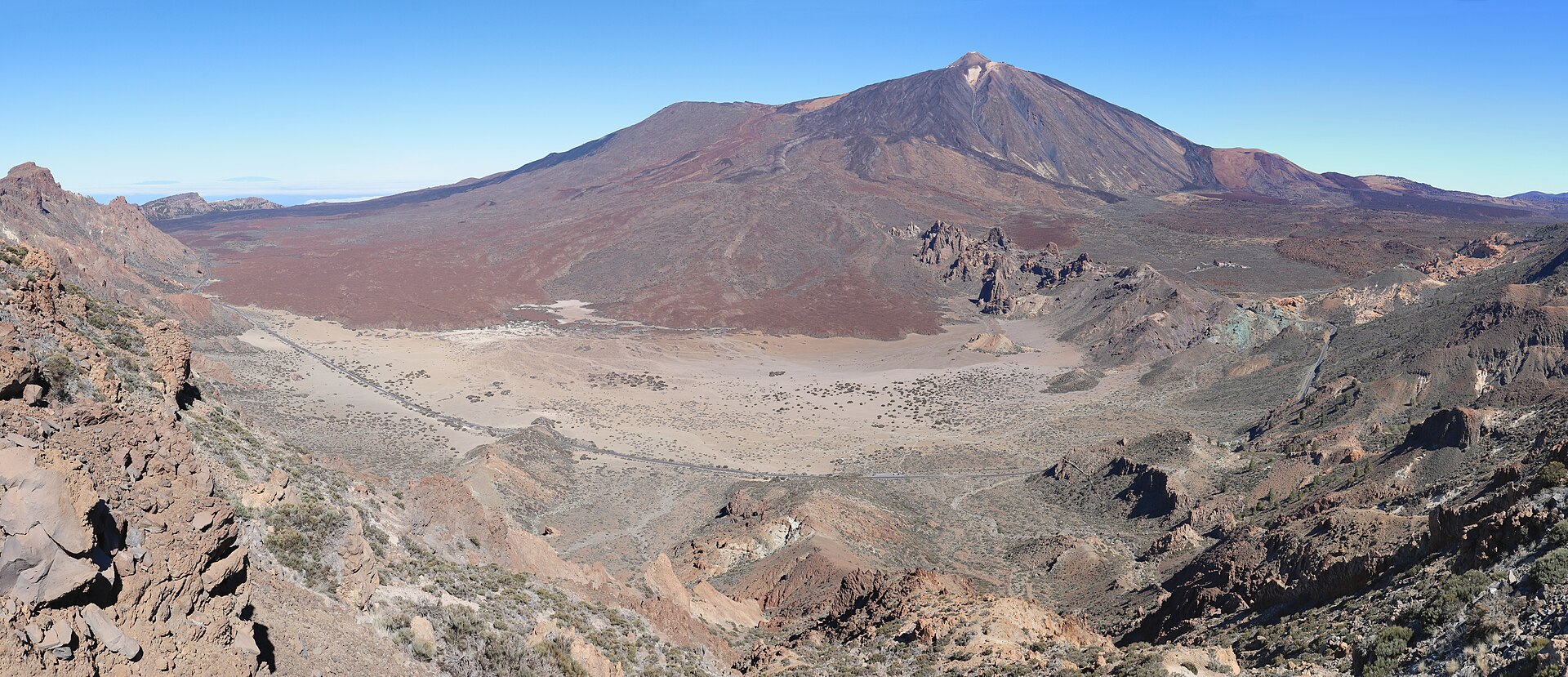
Mount Teide (Pico del Teide, 3,715 metres) — the highest peak in Spain, the highest point in the Atlantic Ocean islands, and the third-largest volcano in the world measured from its ocean floor base — dominates the island of Tenerife from every viewpoint: a perfect volcanic cone of extraordinary visual power, its summit snowcapped in winter, its flanks covered in 2019 lava fields and an alien landscape of obsidian and pumice. The Teide National Park, a UNESCO World Heritage Site, receives 4 million visitors per year, making the cable car (teleferico) to 3,555 metres one of the busiest mountain cable cars in Europe — book online weeks ahead for a permit to ascend to the actual summit crater.
Tenerife — Teide, Forests & the South
Tenerife — the largest Canary Island (2,034 km²) and the most visited — offers the widest range of experiences: the Teide National Park (cable car from the Cañadas del Teide base, €30 return, permits required for the summit crater above the cable car top station) provides the finest mountain landscape in Spain; the Anaga Rural Park in the north-east (a UNESCO Biosphere Reserve, with ancient laurel forest — laurisilva — surviving from the Tertiary period, similar to Madeira's) has the best walking on the island; the Teno Rural Park in the north-west has the most dramatic cliffs and the least-visited landscape. The resort south (Playa de las Américas, Los Cristianos, Costa Adeje) has the busiest beach and nightlife infrastructure. Teide from the Mirador del Pico del Teide viewpoint at dawn (accessible by car before the cable car opens, the park road is open 24 hours) — the volcano above the cloud inversion, the eastern islands visible on the horizon — is the finest dawn landscape in Spain.
Lanzarote — Timanfaya & César Manrique
Lanzarote — the easternmost Canary Island, 125km from the African coast, its landscape defined by the 1730–1736 eruption that covered a third of the island in black lava (Timanfaya National Park, where coaches and walking routes traverse a lunar landscape of volcanic cones, lava tubes and geothermal heat vents where geysers of steam rise from sand-covered fissures) — is the most visually extraordinary of the Canaries and the most architecturally coherent: the artist and architect César Manrique (1919–1992) spent the second half of his career transforming Lanzarote's built environment, designing a series of visitor centres (Jameos del Agua — a lava tube tunnel system with an underground lake containing unique blind albino crabs; Cueva de los Verdes — the most visually stunning lava tube in the world; the Cactus Garden; the Mirador del Río — a clifftop viewpoint above the Chinijo Archipelago) that integrate architecture with volcanic landscape in a completely unique aesthetic. Playa Papagayo (the finest beach on Lanzarote, a series of sheltered coves south of Playa Blanca) is accessible only by dirt track or boat.
Gran Canaria — Maspalomas & Las Palmas
Gran Canaria — the third-largest Canary Island (1,560 km²), its southern coast the Maspalomas dune complex (Dunas de Maspalomas, a 4km² system of sand dunes extending to the beach, the largest natural dune system in Spain and a remarkable landscape of Saharan character 120km from Africa) and its capital Las Palmas de Gran Canaria (Spain's ninth-largest city, with a fine old quarter in the Vegueta neighbourhood, the Las Palmas Cathedral and the house where Columbus stopped on his voyage to America in 1492, now the Casa de Colón museum) — is the island best suited to combining resort beach holidays with genuine cultural tourism. The Roque Nublo (a 65-metre volcanic rock stack on the island's central ridge at 1,813 metres, a 45-minute walk from the Roque Nublo car park) is the finest viewpoint in Gran Canaria: the entire island visible below, the Atlantic on all sides, Teide on the Tenerife horizon on clear days.