Madeira — a volcanic island of 740 square kilometres in the Atlantic Ocean, 940km south-west of Lisbon and 630km west of the Moroccan coast, a Portuguese autonomous region — is one of the most remarkable island landscapes in the world: a volcanic massif rising to 1,861 metres (Pico Ruivo) from the Atlantic, its mountainous interior covered by laurisilva (ancient laurel forest, a UNESCO World Heritage natural landscape, a relic of the Tertiary-period forests that once covered southern Europe and survived the ice ages only on the Atlantic island refuges), its steep volcanic cliffs dropping to the sea on three sides and its southern coast terraced with vineyards and banana plantations in a landscape of extraordinary visual drama. The island's combination of dramatic topography, year-round mild climate (Funchal averages 17–25°C throughout the year, with almost no extreme heat or cold), exceptional walking terrain and unique cultural products (Madeira wine, wickerwork, embroidery, the Monte toboggan) has made it one of the most loyal holiday destinations for European — particularly British — visitors since the 19th century.
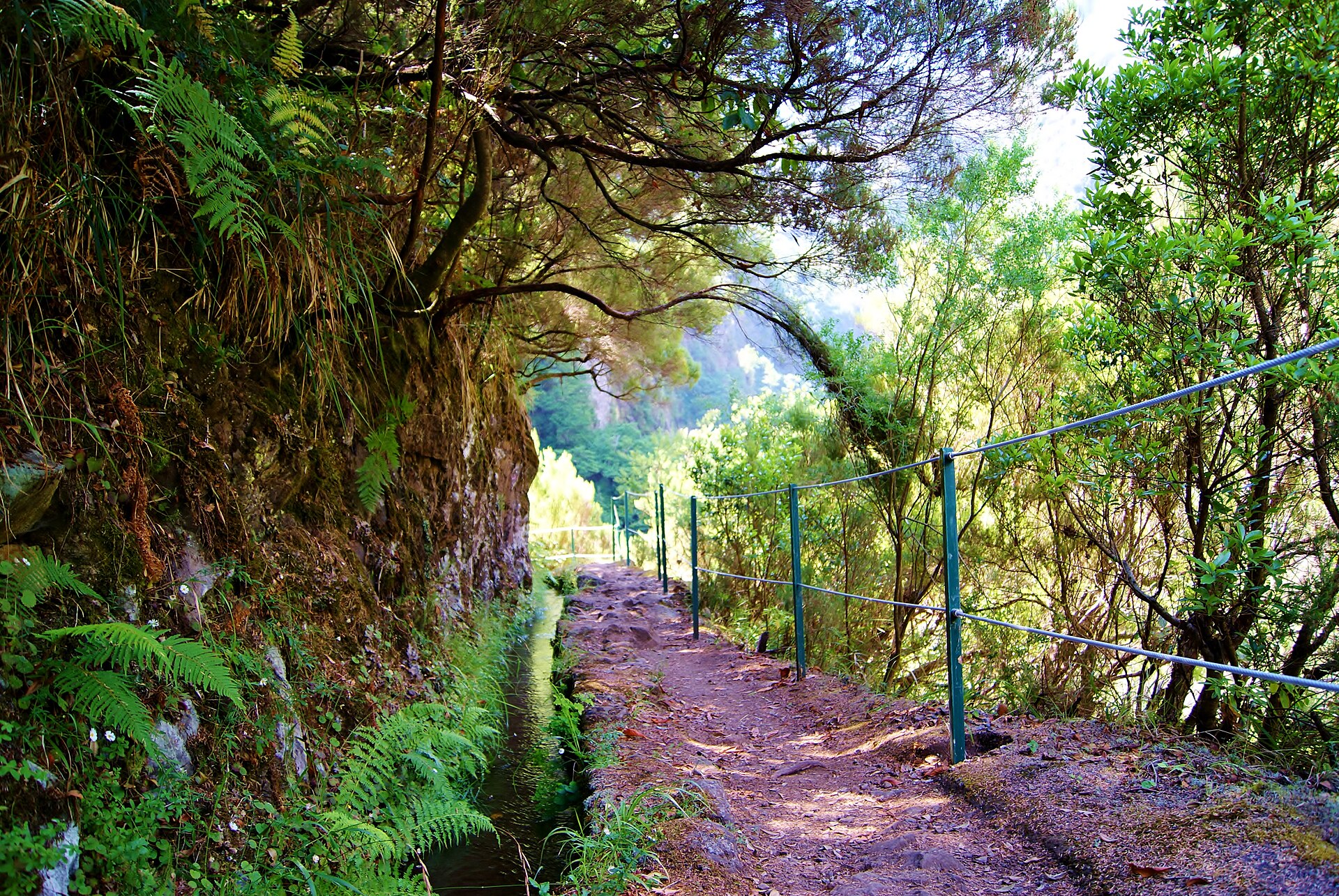
The levada system — 2,500km of narrow irrigation channels cut into the volcanic cliff faces of Madeira's interior, some of them originally constructed in the 15th century to carry water from the wet northern slopes to the drier southern agricultural terraces — is the primary walking infrastructure of the island: paths running alongside the levadas provide access to the island's wild interior at gradient levels (the levadas maintain a precise 1:1,000 gradient to keep the water flowing) that would otherwise be inaccessible, taking walkers through laurel forest, along vertiginous cliff edges, through tunnels and across aqueducts in landscapes of extraordinary beauty.
The Levada Walks
The finest levada walks on Madeira range from the gentle and accessible to the genuinely challenging: the Levada do Caldeirão Verde (from Queimadas forest park, 5.5km each way, through the finest surviving laurel forest, ending at a spectacular waterfall in a green-walled caldeira) is the island's most celebrated walk and accessible to reasonably fit walkers; the Levada das 25 Fontes (from Rabaçal, 3.5km to the 25 springs waterfall basin, through ancient laurel forest) is the finest shorter walk; and the Vereda do Areeiro to Pico Ruivo traverse (from the 1,818m Pico do Areeiro summit to the 1,861m Pico Ruivo, 6km one way, 3–4 hours, considerable scrambling on the ridge) is the finest mountain walk in the island, with views on clear days to Porto Santo and, allegedly, the African coast. A guide is strongly recommended for the more remote levadas (several walkers have been injured or killed after falling from levada channels — the narrow concrete lip above steep drops demands considerable care) and is essential for the mountain ridge routes.
Funchal & the Monte Toboggan
Funchal — Madeira's capital, a city of 111,000 people built on the south coast in a natural amphitheatre of terraced hillside above the harbour — has a characterful old town (the Zona Velha, east of the harbour, with the Mercado dos Lavradores covered market where orchids, tropical fruit and traditional costumes are sold daily), the Funchal Cathedral (Sé, 1514, with extraordinary azulejo tile panels and a cedar-wood ceiling), the excellent Museum of Sacred Art and a growing wine bar and restaurant culture in the former banana warehouses of the harbour front. The Monte toboggan — a traditional means of descent from the Monte parish (550m above Funchal) to the suburb of Livramento, in wicker and wood basket sleds steered by wicker-hatted carreiros (toboggan drivers) who use rubber-soled boots as brakes — is one of the most remarkable survival tourism experiences in Portugal: the 2km descent takes 10 minutes, achieves speeds of 48km/h, and has been operating (for locals initially, then tourists) since the 19th century. The Monte cable car from Funchal to Monte (15 minutes, €13.50 one way) gives the finest aerial view of the city.
Whale Watching & Natural Wonders
Madeira's mid-Atlantic position — on the edge of the deep-water Canary-Madeira submarine ridge — makes it one of the finest whale and dolphin watching destinations in Europe: 28 species of cetacean have been recorded in Madeiran waters, and year-round resident populations of sperm whales (the largest toothed predator on earth), common dolphins, bottlenose dolphins and Atlantic spotted dolphins make sightings on organised boat trips (3–4 hours, approximately €65, operating year-round from Funchal marina) extremely reliable. The volcanic rock pools of Porto Moniz (at the north-western tip of the island, 45 minutes from Funchal) — natural seawater swimming pools carved by lava flows, their walls protecting bathers from the Atlantic swell — are one of the island's finest natural bathing experiences and the most dramatic natural swimming location in Portugal. The north coast road from São Vicente to Santana (through São Jorge) is one of the most spectacular coastal drives in the Atlantic islands: sheer volcanic cliffs dropping 500m to the sea, occasional waterfalls, and a sequence of agricultural terraces that defies topographical logic.