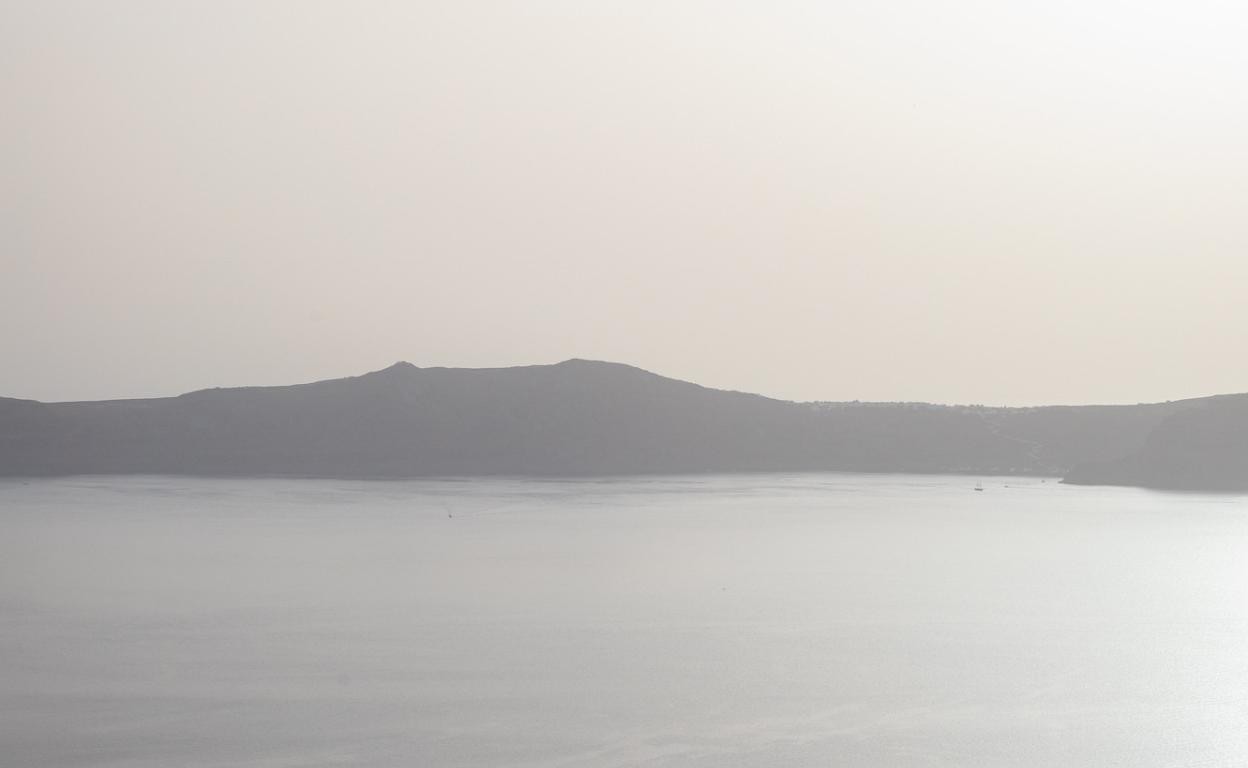
Santorini — the southernmost island of the Cyclades, its crescent shape the remnant of one of the largest volcanic eruptions in recorded history (the Minoan eruption, approximately 1600 BCE, which may have contributed to the collapse of the Minoan civilisation on Crete and generated tsunamis across the Eastern Mediterranean) — is Greece's most photographed island and one of the most recognisable landscapes in the world: the iconic image of white cubic houses with blue-domed churches stacked on the rim of a volcanic caldera above a deep blue sea, best seen from the clifftop village of Oia at the island's northern tip, has become one of the defining visual shorthand of Mediterranean travel. The caldera itself — 12km across and 400 metres deep, the flooded remnant of the ancient volcanic crater — is still geologically active: the Nea Kameni volcanic island at its centre last erupted in 1956, and the waters around it are hydrothermally warm.
Fira — the island's capital, perched on the caldera rim 300 metres above the sea — is the hub of Santorini's considerable tourist infrastructure: hotels, restaurants and bars line the caldera edge, the Museum of Prehistoric Thira houses the extraordinary Minoan-era frescoes discovered at the Akrotiri excavation site, and the cable car (or 588 steps, or donkeys) connects the town to the cruise ship tender dock at Fira Skala below. The 10km caldera-edge walk from Fira to Oia (2.5–3 hours, the most scenic walk in the Cyclades) passes through the intermediate villages of Firostefani and Imerovigli and provides continuously changing views of the caldera, the volcano and the sea below.
Oia & the Sunset
Oia — the clifftop village at Santorini's northern tip, its windmills, blue domes and cave houses carved into the volcanic cliff — is the quintessential Santorini experience and one of the most beautiful villages in Greece. The Oia sunset — watched from the castle ruins (Kasteli) at the village's western end, where hundreds of visitors gather each evening in summer to watch the sun descend behind the volcanic islands in the caldera — is among the most celebrated sunset viewpoints in the world, though the summer crowds (arrive 90 minutes early for a good position) can make the experience feel more like a public event than a natural phenomenon. Oia's restaurants and cafés, though expensive (Santorini is one of Greece's most costly destinations), are genuinely excellent — the caldera-view restaurant terraces are architecturally extraordinary settings for dinner.
Akrotiri & Volcanic Beaches
Akrotiri — the Minoan Bronze Age settlement at the island's southern tip, preserved under volcanic ash from the 1600 BCE eruption in a state of preservation comparable to Pompeii (multi-storey buildings, sophisticated drainage systems, and extraordinary frescoes still in situ) — is one of the most important archaeological sites in the Aegean and one of the most underrated attractions on Santorini: a large protective canopy covers the excavation, guided tours run hourly, and the site reveals the extraordinary sophistication of the Late Bronze Age culture that was abruptly ended by the eruption. The volcanic beaches south and east of Akrotiri — Red Beach (red volcanic pebbles and cliffs), Black Beach (Perissa and Perivolos, black volcanic sand, a long beach with organised facilities and good restaurants) — are unique in the Cyclades and provide striking visual counterpoints to the whitewashed architecture of the north.
Getting Around & Staying
Santorini's airport (JTR) has direct UK connections in summer (from London, Manchester, Birmingham: approximately 3.5 hours). The island is small (18km long) but its road geography — a single spine road along the caldera rim, with switchback descents to the beach villages on the eastern coast — makes it awkward without transport. ATV/quad hire (approximately €25–35/day) is the most flexible option for beach exploration; the island bus (KTEL) connects Fira to Akrotiri, Perissa, Kamari and Oia at regular intervals but is very slow. Accommodation in the caldera-rim villages (Oia, Fira, Imerovigli) is considerably more expensive than in the beach villages of Kamari or Perissa on the eastern coast; the trade-off is caldera views versus sand and swimming. Book accommodation 6–9 months ahead for July–August; Santorini is perennially oversubscribed in peak season.