Athens — one of the world's oldest continuously inhabited cities, the cradle of Western democracy, philosophy and drama — has been transformed in the decades since the 2004 Olympics into one of Europe's most rewarding city-break destinations: a city where 3,500 years of continuous occupation have left layer upon layer of civilisation (Mycenaean, Classical, Hellenistic, Roman, Byzantine, Ottoman, Neoclassical) visible in the streetscape, where the Acropolis — the sacred rock that defines the Athens skyline — rises above neighbourhoods of lively cafés, excellent restaurants and a museum of world-class quality housing the sculptures that once adorned the Parthenon. The transformation of Athens's central neighbourhoods — particularly Monastiraki, Psiri, Koukaki and the area around the Acropolis Museum — from post-war neglect to one of Europe's most vibrant urban food and nightlife scenes has been one of the great urban stories of the 21st century.
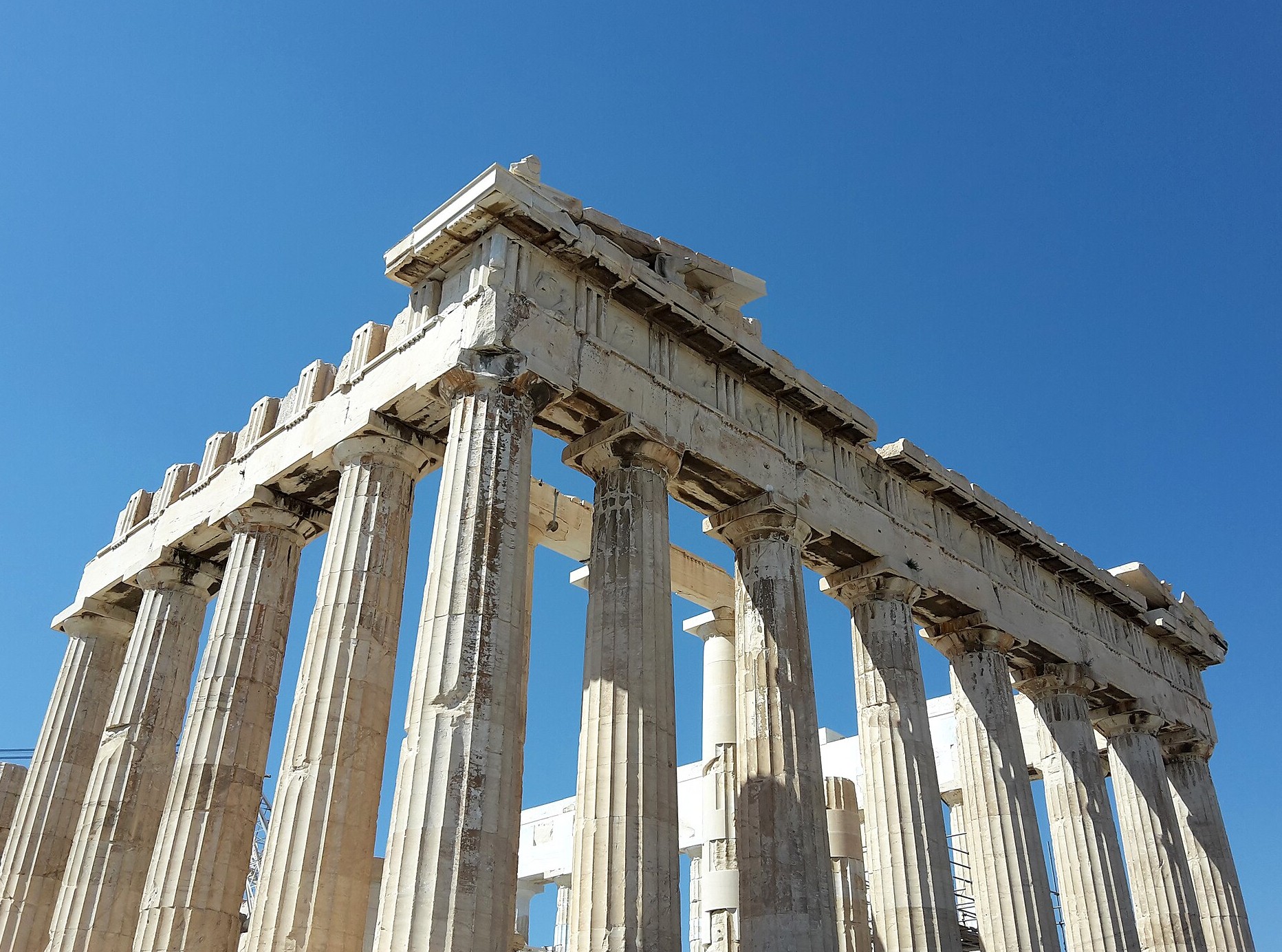
The Acropolis — the "high city", a 156-metre limestone plateau above the modern city — was continuously occupied from the Neolithic period but reached its definitive form between 448 and 432 BCE, when the statesman Pericles oversaw the construction of the Parthenon (the Temple of Athena, the culminating achievement of Greek architecture), the Propylaea (the monumental entrance gateway), the Erechtheion (with the famous Porch of the Caryatids) and the Temple of Athena Nike under the architects Iktinos, Kallikrates and Pheidias. Despite 2,500 years of earthquake, Venetian cannon fire, Ottoman occupation and 19th-century amateur archaeology, the Acropolis remains one of the most powerful architectural experiences in the world.
The Acropolis & Acropolis Museum
The Acropolis is best visited at opening time (8am in summer, when the site opens before the heat and the crowds peak simultaneously around 10am–3pm) or in the final two hours before closing (when the light is golden and the tour groups have departed). The combined ticket (€30 in summer, valid for 5 days) includes the Acropolis, Ancient Agora, Roman Agora, Kerameikos, Hadrian's Library and several other sites — a comprehensive Athens archaeology pass worth purchasing on arrival. The Acropolis Museum — 300 metres south of the Acropolis entrance, opened 2009 — is one of the finest archaeological museums in Europe: its top-floor Parthenon Gallery, where the surviving Parthenon frieze sections are displayed with plaster-cast reproductions of the Elgin Marbles (held in the British Museum) in their original configuration, makes the strongest possible case for their repatriation while providing the fullest available understanding of the complete sculptural programme.
Ancient Agora & Monastiraki
The Ancient Agora — below the north-western slope of the Acropolis, the civic heart of Classical Athens where Socrates argued and Athenian democracy was administered — contains the Stoa of Attalos (a reconstructed 2nd-century BCE colonnaded commercial building, now housing the Agora Museum) and the Temple of Hephaestus (the best-preserved Doric temple in Greece, almost entirely intact). Monastiraki — the neighbourhood immediately north of the Agora, its square dominated by the restored Tzistaraki Mosque — has one of Athens's best flea markets (particularly on Sundays, when Avyssinias Square fills with antiques, furniture and bric-à-brac dealers). The street food around Monastiraki Square (souvlaki, gyros, loukoumades) is some of the best in Athens; the rooftop bars above the square have Acropolis views that rival any in the city.
Athens Beyond the Ruins
The National Archaeological Museum — a 30-minute walk north of the Acropolis, or 20 minutes on the metro — is the world's most comprehensive collection of ancient Greek art: the Mycenaean collection (gold death masks, the Treasury of Atreus finds), the Cycladic collection, the Archaic and Classical sculpture galleries and the Antikythera Mechanism (a 1st-century BCE astronomical computer of extraordinary sophistication — the first gear-driven calculating machine known to history) together constitute an overwhelming cultural experience that requires at least 3 hours. Plaka — the oldest continuously inhabited neighbourhood in Athens, its 19th-century neoclassical houses below the Acropolis converted to tavernas, souvenir shops and small hotels — is the most tourist-facing area of the city but rewards an early morning or evening walk when the streets are quiet. Koukaki (south of the Acropolis Museum) has become Athens's finest neighbourhood for restaurants and coffee shops aimed at local Athenians rather than tourists.