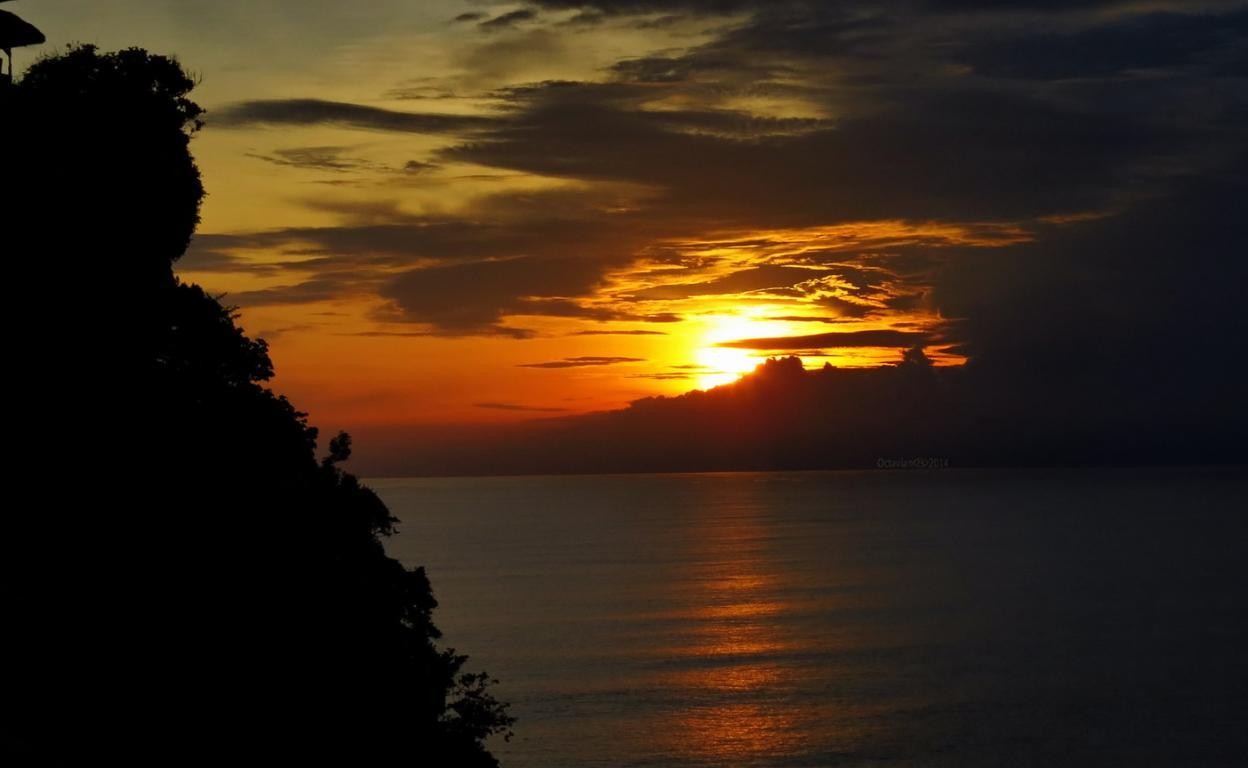
Pura Luhur Uluwatu — perched on a sheer 70-metre cliff at the southwestern tip of the Bukit Peninsula — is one of Bali's nine directional temples (kayangan jagat) and the island's most dramatically situated sacred site. The temple itself, with its distinctive black coral stone architecture draped with the white-and-gold cloth of an active place of Hindu worship, sits literally at the edge of the cliff, surrounded by wild monkeys and approached along a path through dense frangipani forest. Below, the Indian Ocean breaks against the base of the cliff in an unbroken sequence of swells that has made Uluwatu one of the great surfing destinations in Asia — the famous Uluwatu surf break is visible from the clifftop, and the surf caves at the base of the cliffs are accessible from Padang Padang beach nearby.
The nightly Kecak fire dance at Uluwatu — performed on an outdoor stage at the cliff edge as the sun sets behind the Indian Ocean — is one of the most extraordinary theatrical experiences in Southeast Asia. The performance involves approximately 70 male performers sitting in concentric circles, chanting a rhythmic "cak-cak-cak" sound (the name derives from this chant) while narrating scenes from the Hindu epic Ramayana through movement, gesture and fire. The combination of the chanting, the fire, the setting sun on the ocean and the cliff temple backdrop creates something genuinely transcendent. Tickets (around £8) are sold at the gate; arrive 45 minutes before the 6pm performance to find the best seats.
The Temple Complex
The outer temple is accessible to non-Hindu visitors — sarong and sash are required (provided at the gate) and dress code is enforced. The inner sanctum (where active worship takes place) is closed to visitors. The cliff path around the temple complex provides successive viewpoints over the Indian Ocean; on clear days the western horizon extends to nothing, with the Indian Ocean unbroken to Antarctica. The resident monkeys are aggressive and have learned to snatch glasses, cameras, hats and any loose object — secure everything. Temple staff carry long sticks to deter the bolder ones but cannot guarantee security.
Uluwatu Surf & Beaches
Uluwatu's surf break — one of the finest left-handers in Asia, breaking off a reef below the temple cliff — is the centrepiece of a surf culture that has developed along the Bukit Peninsula over four decades. The break is accessible from a small cave at the base of the cliff (reachable by a steep, rocky path) and is intermediate-to-advanced in difficulty. The Bukit Peninsula's beaches — Padang Padang (the famous "Blue Point" used in the Julia Roberts film Eat Pray Love), Bingin, Dreamland and Balangan — are the finest beaches in Bali: white sand coves accessible via steep cliff staircases, with surf-side warungs serving cold Bintang beer and nasi goreng above the breaking waves. These beaches attract a more alternative, surf-oriented crowd than the resort beaches of Kuta and Seminyak to the north.
Practical Details
Uluwatu is approximately 25km south of Kuta (40–50 minutes by private driver) and 1.5 hours from Ubud — too far for a morning excursion but perfectly positioned for an afternoon-into-evening trip combining a beach visit with the sunset Kecak performance. The temple is open daily 9am–7pm. The Kecak performance begins at 6pm and runs for approximately one hour. Several restaurants along the cliff path above the temple serve sunset dinners with ocean views — book in advance for the better-positioned ones (Single Fin at Uluwatu is the most famous, though more bar-and-restaurant than fine dining).