Tarangire National Park — 2,850 sq km of Tanzania's northern wildlife circuit, 118km southwest of Arusha — is the least visited of the major northern Tanzania parks and, for many experienced safari-goers, the finest. During the dry season (June–October), the Tarangire River becomes the only permanent water source across a vast region, drawing extraordinary concentrations of wildlife from far beyond the park's boundaries: up to 3,000 elephants gather around the river in the peak dry months, along with lion prides, leopard, cheetah, wild dog (one of Tanzania's most reliable wild dog locations), enormous buffalo herds and migrating wildebeest and zebra.
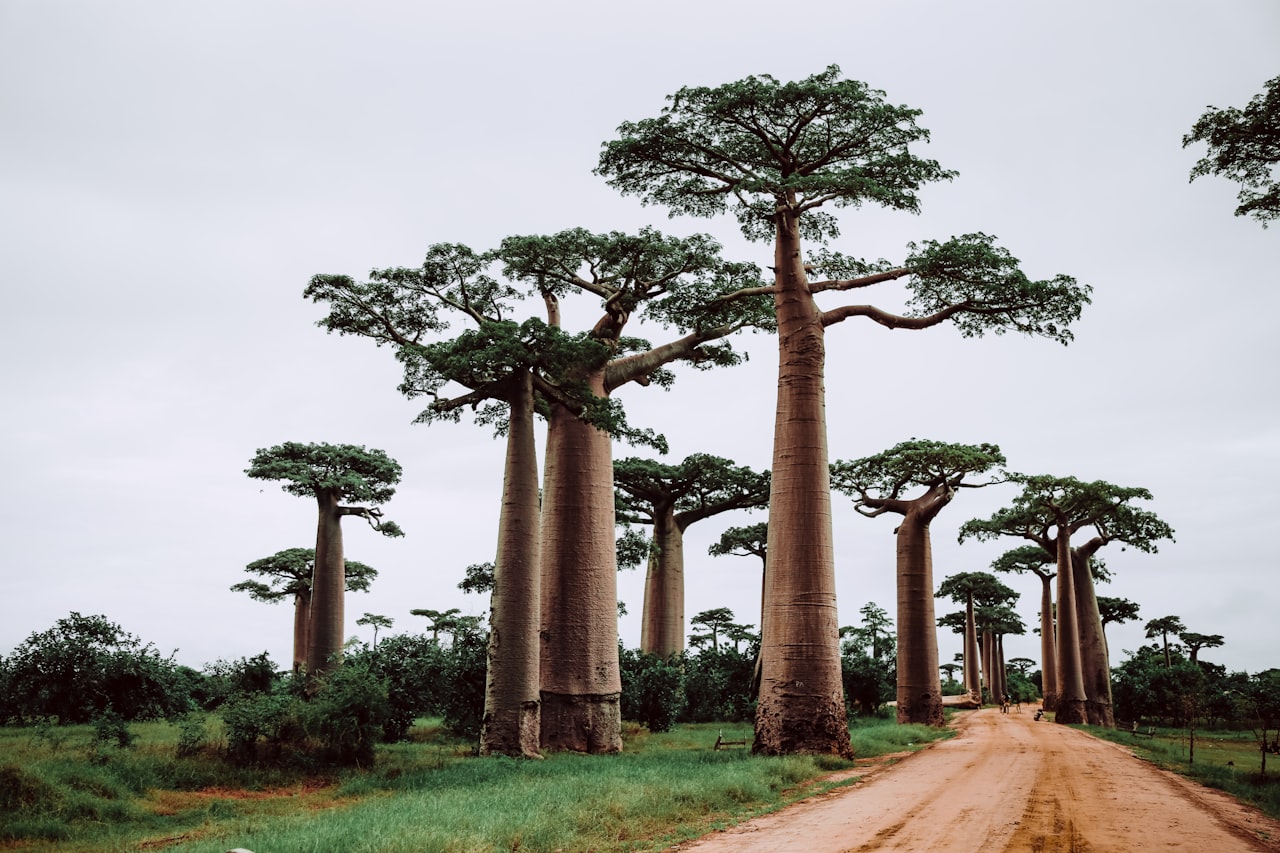
Tarangire's defining aesthetic quality is its extraordinary baobab trees — ancient, swollen-trunked giants that can live for 3,000 years and reach circumferences of 30 metres. These prehistoric trees, scattered across the golden dry-season landscape, give the park a primordial atmosphere unlike any other in East Africa. The Tarangire River valley, seen from the high viewpoint near the main entrance, with its S-curve through a landscape of baobabs, acacias and distant mountains, is one of Africa's most visually distinctive safari panoramas.
The Elephants
Tarangire has Tanzania's highest concentration of elephants — the herds that converge on the river from July to October include some of the largest family groups in East Africa. Matriarch-led breeding herds of 50–80 animals are not unusual; enormous territorial bulls stand solo at favourite water holes. The park is one of the best in Africa for observing the full complexity of elephant social behaviour: the greeting ceremonies, the discipline and education of calves, the remarkably gentle interactions between related individuals within large family groups.
Tree-Climbing Lions
Tarangire is one of a handful of locations in East Africa where lions regularly climb trees — a behaviour not fully understood but possibly related to escaping biting insects at ground level. Tarangire's lions are frequently spotted draped across the branches of large acacias and sausage trees, a sight that surprises visitors who consider tree-climbing the exclusive behaviour of leopards. Seeing a full-grown lion asleep 6 metres above the ground, utterly relaxed, is one of Tarangire's most distinctive experiences.
The Dry Season Experience
Tarangire is most compelling in the dry season (July–October) when wildlife concentrations at the river are at their peak. In the green season (November–May), wildlife disperses across a much wider area and the vegetation is dense, reducing sightlines. The wet-season Tarangire is quieter and cheaper, with excellent birdlife (over 550 species recorded), but the dramatic elephant concentrations require the dry season.