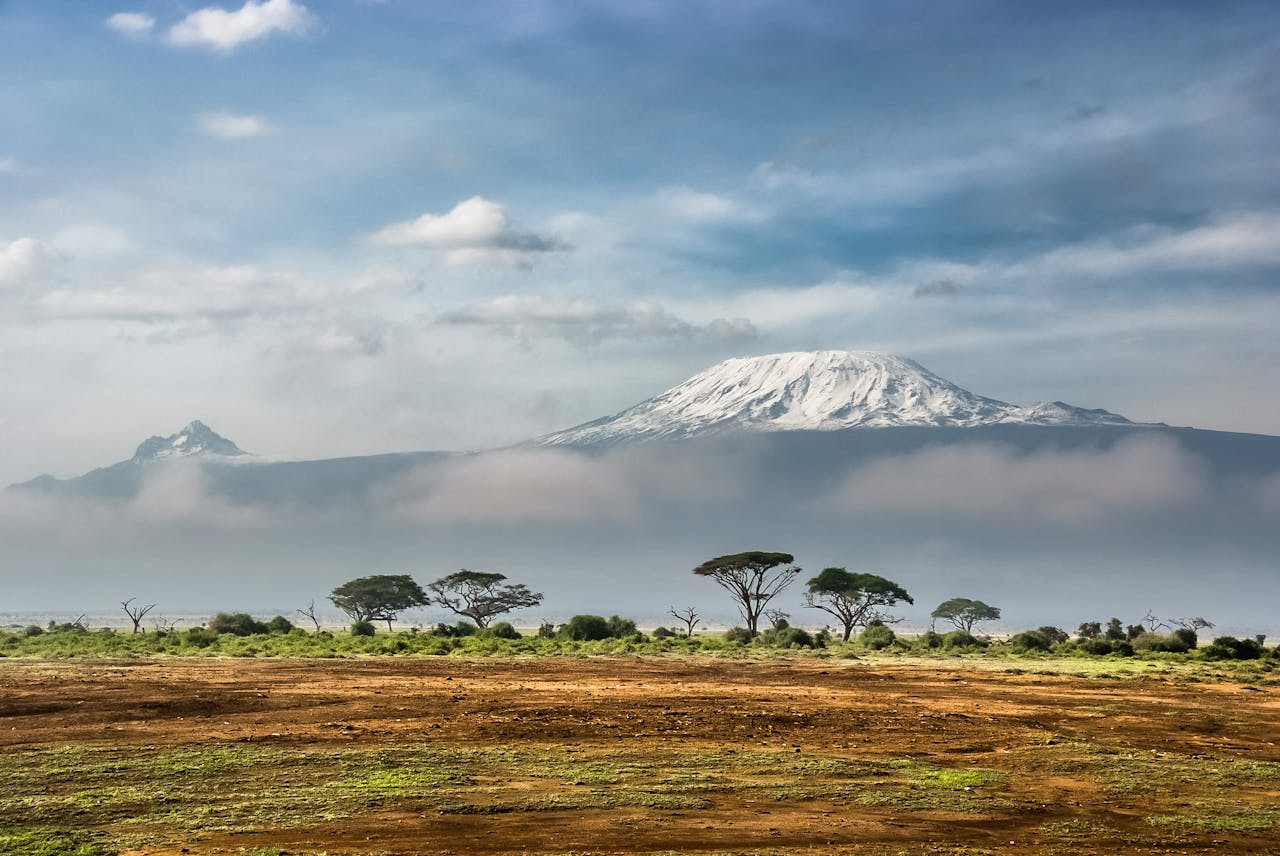
Mount Kilimanjaro — at 5,895 metres the highest peak in Africa — is one of the world's great trekking destinations and the most accessible high-altitude summit on Earth. Unlike the peaks of the Himalayas or Andes, Kilimanjaro requires no technical climbing equipment, no ropes, no ice axes (on the standard routes) and no previous mountaineering experience — just determination, fitness and several days' acclimatisation. Approximately 35,000 people attempt the summit each year; around 65% succeed. The route takes trekkers through five distinct ecological zones: rainforest, heath, moorland, alpine desert and arctic summit — one of the most remarkable environmental transitions available to walkers anywhere in the world.
The mountain stands alone on the Tanzanian plain near the town of Moshi, rising from savannah to glacier in a dramatic isolated mass that has been the backdrop to a century of safari photography. It is visible from the Amboseli National Park in Kenya 50km to the north — the iconic silhouette that appears behind Amboseli's elephant herds in countless photographs.
The Routes
Marangu ("Coca-Cola") Route: The only route with permanent hut accommodation. The shortest and most used route (5–6 days), but also has the lowest success rate due to insufficient acclimatisation time. Suitable for those who dislike camping.
Machame ("Whiskey") Route: The most popular route overall — a 6–7 day circuit through more varied scenery than Marangu, with better acclimatisation profiles. Camping throughout. The most recommended route for most trekkers.
Lemosho Route: The premium route — 7–8 days, starting from the western slopes, with the most scenery, best acclimatisation and least crowding. The choice of most experienced operators. Higher cost but significantly higher success rate.
Rongai Route: Approaches from the north (near Kenya), drier and less crowded than the southern routes. Good option in the rainy season when other routes are muddier.
Difficulty & Preparation
The summit attempt typically begins at midnight from the final camp (typically at 4,600–4,700m), allowing arrival at Uhuru Peak (5,895m) at sunrise. This midnight start, combined with the effects of altitude (reduced oxygen, extreme cold, physical and psychological exhaustion), makes the final push the most challenging part of the climb. Success depends primarily on acclimatisation — choosing a longer route (7+ days) dramatically improves summit chances.
Pre-trek fitness preparation — regular cardiovascular exercise for 3 months before the climb — significantly improves comfort and success rates. Prior high-altitude experience (above 4,000m) is useful but not essential.
Practicalities
All trekkers must be accompanied by a licensed guide and hire from a registered Kilimanjaro operator — independent climbing is not permitted. All food, tents, cooking equipment and the majority of personal gear is carried by porters, whose welfare (fair wages, weight limits, accommodation quality) varies significantly between operators. Choose operators who are KPAP (Kilimanjaro Porters Assistance Project) partners to ensure ethical treatment of porters.