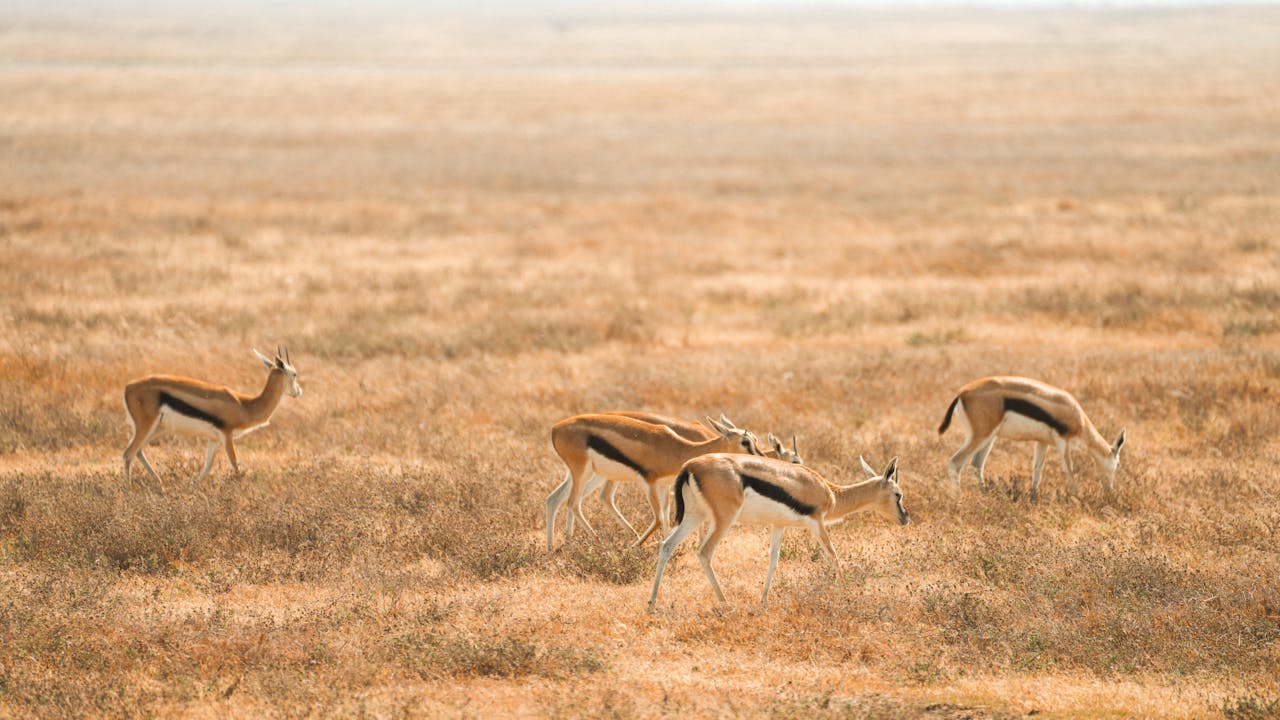
The Serengeti — from the Maasai word "Siringet" meaning "endless plain" — is Africa's most iconic national park and the stage for the planet's greatest wildlife spectacle: the Wildebeest Migration, in which 1.5 million wildebeest, 200,000 zebra and 350,000 Thomson's gazelle follow an ancient circular path across the 14,763 sq km of Serengeti and neighbouring Masai Mara in Kenya. The migration has no fixed schedule — it follows the rains and the grass — but it is always happening somewhere within the ecosystem, and the Serengeti holds a resident wildlife population of extraordinary density even when the migration herds have moved on.
The Serengeti consistently delivers the finest Big Five safari experience in Africa: its lion population is one of the most studied and photographed on Earth, leopards are well-habituated to vehicles along the kopje-dotted Seronera river system, cheetah are abundant on the open southern plains, and elephant, buffalo and black rhino all occur in significant numbers. The sheer size of the park means that certain areas feel genuinely remote — a quality increasingly rare in East African safari destinations.
The Great Migration
The migration follows a broad annual pattern: the herds calve on the short-grass southern plains (Ndutu area, December–March), then move north and west through the Western Corridor (April–June), crossing the Grumeti River and encountering waiting crocodiles before continuing to the Mara River crossings in the north (July–October). The Mara River crossings — which involve vast columns of wildebeest plunging down steep banks into crocodile-filled water — are among the most dramatic wildlife spectacles on Earth.
The key to seeing the migration is timing and positioning — the herds' location within the park depends entirely on grass and rainfall conditions, which vary year to year. A good specialist operator will position clients appropriately; mobile camps that can move to follow the herds offer the most flexibility.
The Serengeti's Regions
The Southern Plains (Ndutu): Short-grass plains fed by underground alkaline springs — the calving grounds where the migration assembles from December to March. Extraordinary predator activity accompanies 400,000 calves born in a six-week period.
The Central Seronera: Year-round wildlife, the highest leopard density in the Serengeti, and the famous kopjes (rocky outcroppings) where lion prides are found sunning themselves. The most accessible region and the park's administrative hub.
The Northern Serengeti (Lobo/Kogatende): Remote, dramatic and far less visited than the south. The Mara River crossings happen here; the terrain is hillier and greener. The finest camps in the Serengeti are concentrated here.
Hot-Air Balloon Safaris
Like the Masai Mara, the Serengeti offers hot-air balloon safaris at dawn — and the Serengeti's larger, less visited areas make the aerial experience feel particularly intimate. The sunrise over the Serengeti from 300 metres — with the outline of Kilimanjaro on the southern horizon and herds visible for 20km in every direction — is one of Africa's great travel experiences. Champagne breakfast in the bush follows the flight. Available from most lodge areas; book through camp operators well in advance.