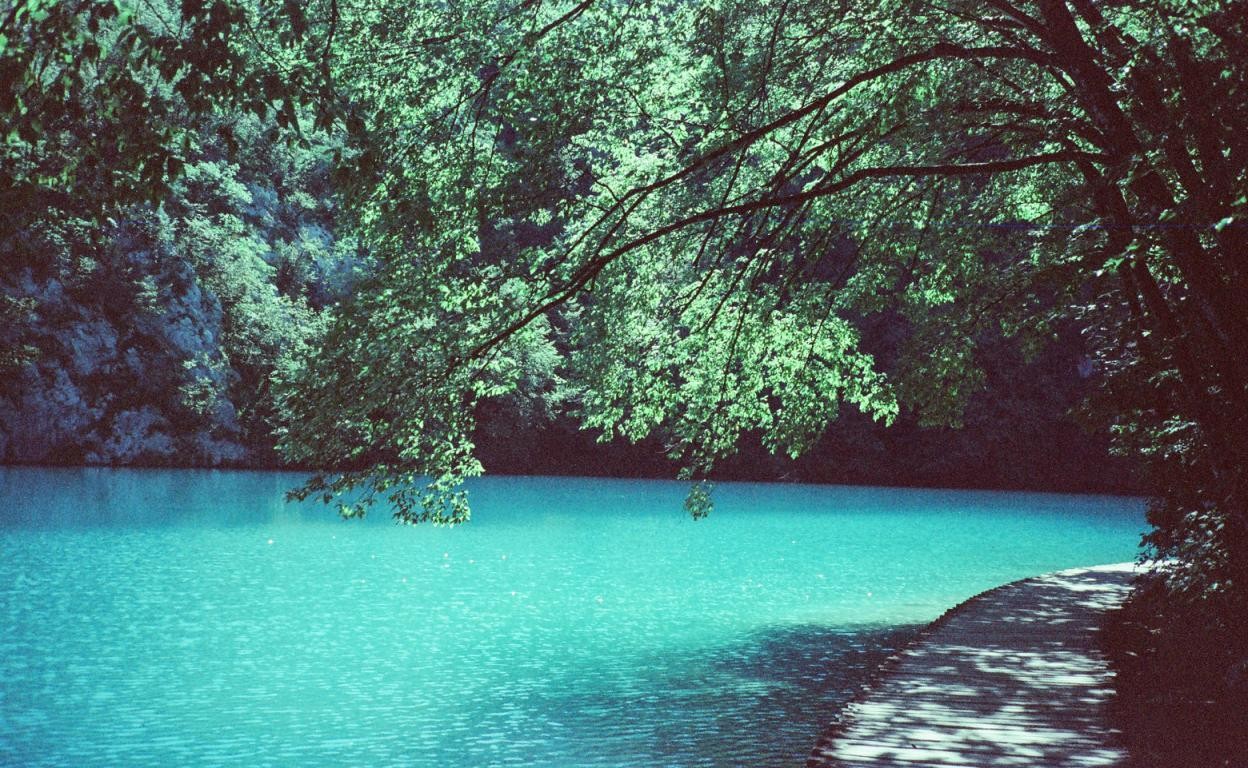
Plitvice Lakes National Park — a UNESCO World Heritage Site in Croatia's mountainous Lika region, 130km south of Zagreb — is one of the most photographed natural landscapes in Europe: a series of 16 terraced lakes connected by hundreds of waterfalls, their colours ranging from turquoise to emerald to azure depending on the mineral content, depth and seasonal variation of the water. The lakes are formed by the accumulation of travertine (calcium carbonate deposited by water and algae over thousands of years), which creates natural dams between the successive lakes and the extraordinary cascades, some falling directly through forest. The largest waterfall, Veliki Slap (78 metres), is the highest waterfall in Croatia. The whole system is surrounded by old-growth beech and fir forest roamed by bears, wolves and lynx.
The park's 8 marked trails range from 2-hour family-friendly circuits to 6-hour full-park explorations; the wooden boardwalks that run along the lake edges and behind the waterfalls give visitors the extraordinary experience of walking through the middle of the cascades, with water flowing beneath the boards and falling around them. The lakes are particularly beautiful in early morning light (when the sun angle illuminates the colours most vividly) and in autumn (when the forest turns gold and orange around the turquoise water). Spring visits (late April–May) see the snowmelt waterfalls at maximum volume.
Trails & What to See
The park is divided into Upper Lakes (Gornja jezera) and Lower Lakes (Donja jezera), connected by a boat across the largest lake (Jezero Kozjak) and a short bus service. The Lower Lakes have the most spectacular scenery — the concentration of waterfalls, the crystal-clear shallow sections where the lake bed is visible through the water, and Veliki Slap (visible from above and below via the boardwalk trail) make this the park's highlight. The recommended route for a half-day visit is Trail C (2 hours) or Trail H (4–6 hours, covering both upper and lower lakes). The boat across Kozjak (included in the ticket) is a pleasant 10-minute break in the middle of the circuit.
Practical Visiting
Plitvice is Croatia's most popular natural attraction and manages visitor numbers carefully — the park sells timed-entry tickets online and the most popular entry times (9–11am) book out weeks ahead in summer. Arriving at opening (7am) gives the most peaceful boardwalk experience and the best morning light on the water. The ticket (€23–40 depending on season) includes unlimited boat and bus use within the park. Photography is the primary activity for most visitors — a camera (rather than just a phone) repays at Plitvice more than almost anywhere in Europe, particularly with polarising filter to reduce surface reflections and enhance the underwater colours. There is no swimming in the lakes (protecting the fragile travertine ecosystem) and drones are prohibited.
Getting There
Plitvice is most conveniently reached by car (2 hours from Zagreb, 3.5 hours from Split) or by bus from Zagreb (3 hours, frequent Autotrans/FlixBus services). Day trips from Zagreb or Split are possible but long — a night at one of the park's official hotels (Hotel Jezero, Hotel Plitvice) or in one of the many guesthouses in the nearby village of Mukinje is strongly recommended to allow an early morning visit and a second circuit in the quiet late afternoon. April–June and September–October are the best times — summer (July–August) is extremely crowded with queues for the most popular boardwalk sections.