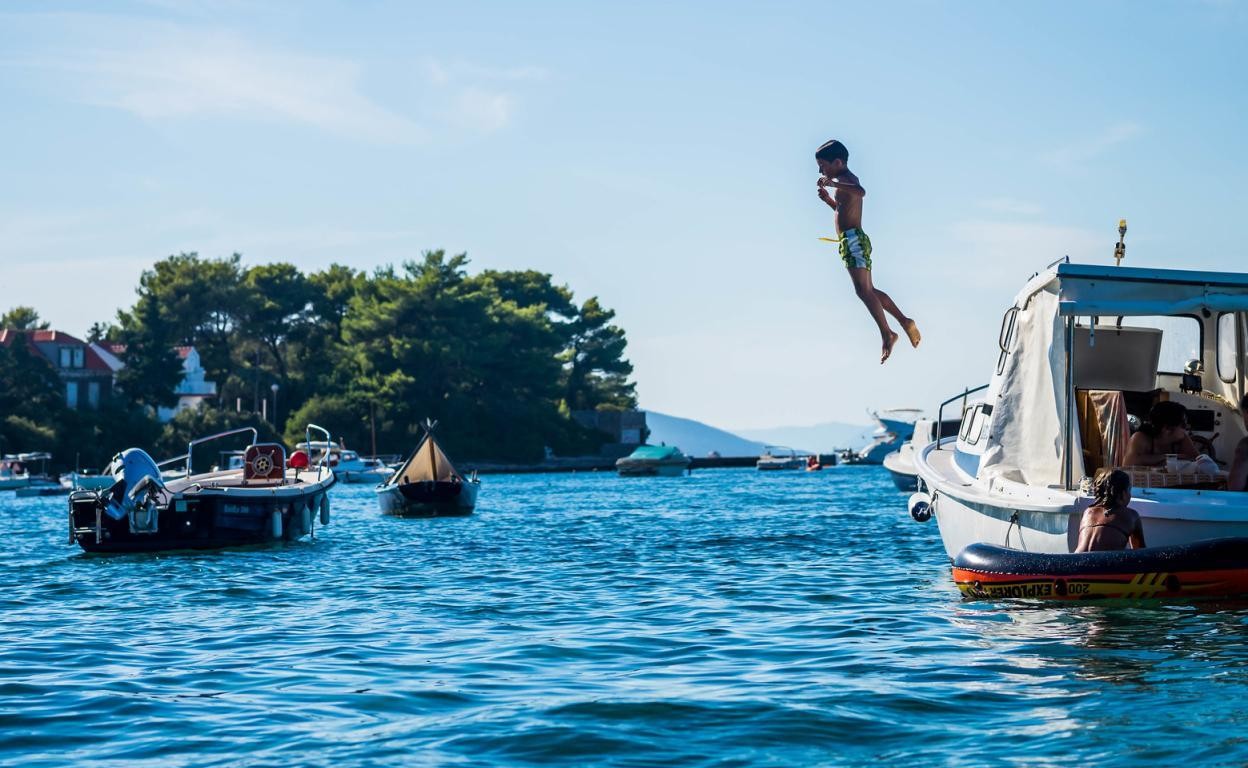
Krka National Park — a 109 square kilometre protected landscape in the Šibenik hinterland of Dalmatia, centred on the Krka River as it descends through a series of limestone canyons and tufa barriers to the Adriatic — contains one of the most celebrated natural spectacles in Croatia: Skradinski Buk, a sequence of 17 interconnected waterfalls cascading over travertine barriers into a series of emerald pools that are, uniquely among Croatian national parks, swimmable. The park protects 72km of the Krka River from its source near Knin to its mouth at Šibenik, a stretch of extraordinary biological diversity — over 860 plant species, 222 bird species and a river ecosystem of unusual clarity and richness — contained within a landscape of gorges, wetlands, traditional watermills and island monasteries that have operated continuously since the 15th century.
The park's accessibility from the Dalmatian coast (45 minutes from Šibenik, 1 hour from Split) and the possibility of swimming directly in the waterfall pools made Krka one of Croatia's most visited national parks — a distinction that led to the temporary closure of swimming at Skradinski Buk between 2021 and 2024, before a managed swimming zone was reinstated. Current rules should be checked before visiting, but even without swimming, Skradinski Buk remains an extraordinary landscape: wooden boardwalks cross the waterfall sequences, traditional watermills grind grain on the upper terraces, and the view from the upper observation point across the cascade network is among the finest in Dalmatia.
Skradinski Buk & the Waterfall Walk
Skradinski Buk — the park's centrepiece, a 800-metre sequence of 17 cascades descending 45 metres through tufa barriers — is reached either by boat from Skradin town (30 minutes up the estuary, included in the park ticket) or by car to the upper entrance above the falls. The circular boardwalk route around the falls takes 1–1.5 hours at a relaxed pace, passing the traditional watermills (some still operational, grinding corn using the waterfall's power), the reed-fringed pools below the main cascade, and a series of viewpoints across the full extent of the waterfall system. The island of Visovac — sitting in the widened river section above Skradinski Buk — contains a Franciscan monastery founded in 1445 whose monks have maintained continuous occupation through Venetian, Ottoman and Yugoslav rule; boat excursions visit the island from the main park docks and include a guided tour of the monastery collection.
Roški Slap & the Upper Park
The upper section of the park — less visited than Skradinski Buk and requiring separate transport or a longer boat journey — contains Roški Slap, a smaller but equally beautiful waterfall sequence surrounded by traditional watermills and rich birdlife (the park is one of Croatia's most important nesting sites for peregrine falcons and kingfishers). The canyon sections of the Krka above Roški Slap, accessible only by boat, reveal the river's most dramatic geology: sheer limestone walls rising 200 metres from the water, occasional village settlements on the canyon rim, and the extraordinary silence of a landscape largely unchanged since the Franciscan monks first settled here in the 15th century. Boat-only excursions from Lozovac and Skradin cover the full river length in summer.
Getting to Krka from the Coast
Krka National Park has two main entrances: Skradin (on the coast road, with boat transfers up the estuary to Skradinski Buk) and Lozovac (the upper car park entrance, with shuttle buses down to the falls). From Split (1 hour by car on the A1 motorway and D33), the Lozovac entrance is marginally more convenient; from Šibenik (30 minutes), either entrance works equally well. Organised day trips from Split and Trogir include park entry and boat transfers. The park is best visited mid-week and in the first or last hour of opening (8am–9am or in the final hour before close) to avoid the peak crowds that arrive with coach groups between 10am and 3pm in summer.