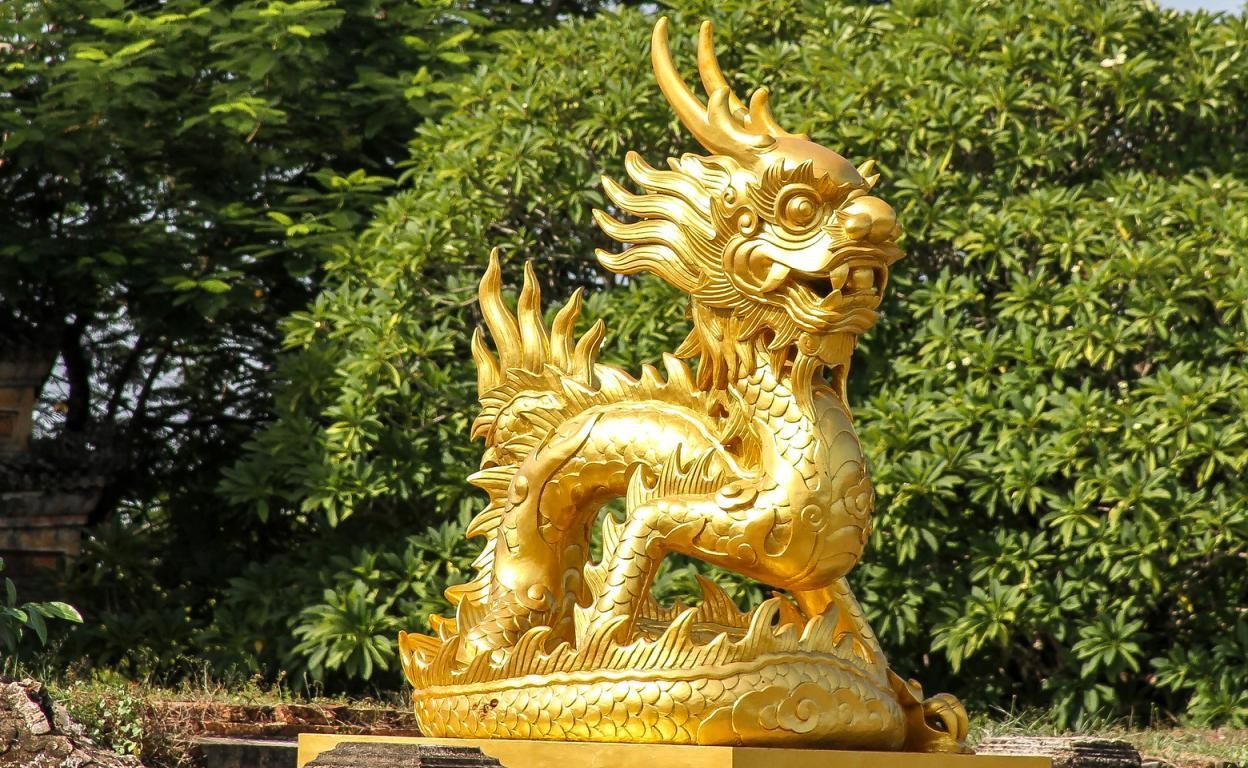
Huế — the former imperial capital of Vietnam, on the banks of the Hương (Perfume) River in the country's narrow central region — was the seat of the Nguyễn Dynasty from 1802 to 1945, the last ruling family of a unified Vietnam before French colonisation and the subsequent division of the country. The Imperial Citadel (Kinh Thành Huế) — a vast moated compound of 10 square kilometres modelled on Beijing's Forbidden City but rendered in Vietnamese architectural language — contains the Imperial City (Hoàng Thành) within it, and within that the Forbidden Purple City (Tử Cấm Thành), reserved for the emperor alone. Much of the complex was destroyed by the fighting of the 1968 Tết Offensive and by general neglect; the ongoing UNESCO-supported restoration is one of Vietnam's most ambitious heritage conservation projects.
Huế's UNESCO World Heritage listing (1993) covers both the citadel complex and the seven royal tombs of the Nguyễn emperors in the hills south of the city — each tomb a distinct architectural masterpiece expressing the personality and aesthetic preferences of the emperor it commemorates. The tomb of Tự Đức (1864–1883) — the longest-reigning Nguyễn emperor, a poet and philosopher who designed his own tomb complex as a garden retreat during his lifetime — is the most beautiful, with lotus ponds, pavilions and a poetry-engraved stele of extraordinary length. Minh Mạng's tomb (1840) is the most formally imposing. Khải Định's tomb (1925) is the most eccentric, its exterior in an elaborate Art Deco-meets-Vietnamese-imperial fusion style that makes it entirely unlike any other Vietnamese imperial architecture.
The Imperial Citadel
The Citadel's main gate (Ngọ Môn, the Noon Gate) — a five-arched ceremonial entrance topped by a two-storey pavilion where the emperor observed important ceremonies — is the finest surviving structure in the outer walls. The Thai Hòa Palace (Palace of Supreme Harmony) within the Imperial City is the best-preserved of the major audience halls, its interior of lacquered columns, painted ceilings and gold ornamentation giving an impression of imperial court splendour. The Forbidden Purple City, entirely restricted to the emperor and his concubines during the Nguyễn period, is now largely in ruins — the destroyed buildings are marked by foundations and explanatory boards — but the Duyệt Thị Đường Theatre (restored, royal performances given) and several surviving structures remain.
Royal Tombs & Thiên Mụ Pagoda
The royal tombs (5–15km south of the city, accessible by scooter, taxi or dragon boat on the Perfume River) require at least a full day to do justice to more than two or three. Tự Đức's tomb, Minh Mạng's tomb and Khải Định's tomb are the three most visited and most architecturally significant — entry to each is covered by the Huế Heritage ticket (available at the Citadel entrance). Thiên Mụ Pagoda — a seven-storey octagonal tower on a bluff above the Perfume River, 5km west of the city centre — is the most visited pagoda in Huế and the most evocative riverside site: it is here that the Austin car used by Thich Quang Duc on his famous 1963 self-immolation protest drive to Saigon is preserved (the monk burned himself to death in Saigon in protest against Buddhist persecution — the photograph became one of the most important images of the 20th century).
Huế Cuisine
Huế's royal cuisine — developed to feed the Nguyễn emperors and their courts, with a tradition of elaborate presentation, delicate flavours and a vast range of small dishes — is among the most sophisticated in Vietnam and fundamentally different from the street food culture of Hanoi or Saigon. Bún bò Huế (the spicy lemongrass beef noodle soup that the city claims as its signature dish, and which is markedly better in Huế than anywhere else), bánh khoái (crispy rice pancakes filled with pork and shrimp), nem lụi (pork meatballs on lemongrass skewers) and the extraordinary variety of bánh (rice cake dishes) available at the Đông Ba Market are all essential eating. Lunch at one of the garden restaurants in the citadel's grounds — Tịnh Gia Viên or Ẩm Thực Cung Đình — serves traditional royal cuisine in a setting appropriate to its origins.