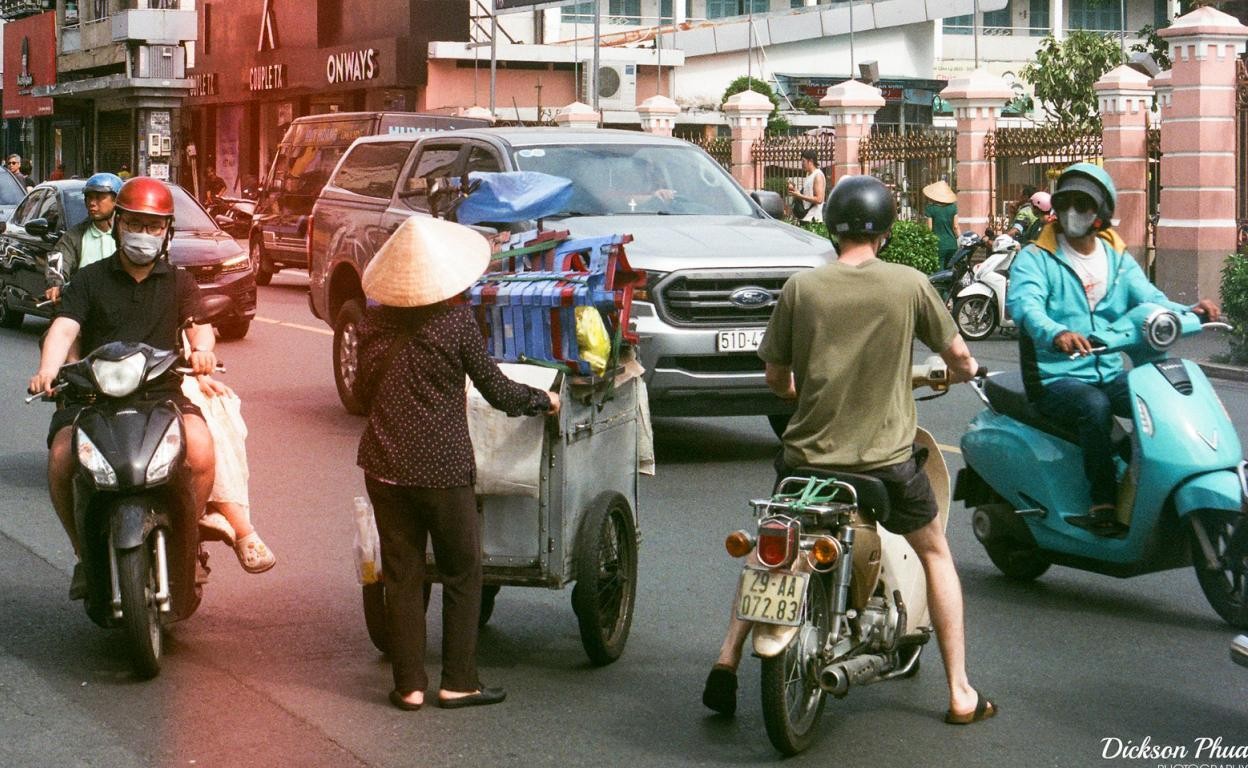
Ho Chi Minh City — officially renamed from Saigon after the communist North's victory in 1975, though its inhabitants largely continue to call it Saigon — is Vietnam's largest city (9 million in the metropolitan area), its economic capital and its most energetically modern place: a city of motorbike swarms (approximately 9 million registered bikes), rooftop bars, French colonial heritage in the Downtown 1 district, street food alleys (hẻm) disappearing between apartment blocks, luxury malls alongside traditional wet markets, and a startup and restaurant culture that is transforming the city at extraordinary speed. Saigon is louder, faster, hotter and less reflective than Hanoi — and entirely invigorating for visitors who embrace the energy.
The city's complex history — its periods under Cham, Khmer, French, Japanese and American influence, followed by the fall of Saigon in April 1975 and the subsequent reunification of Vietnam — is preserved in a set of museums and sites that are among the most important and most sobering in Southeast Asia. The War Remnants Museum (formerly the Museum of American War Crimes), with its documentation of Agent Orange effects, helicopter gunships and the photographic record of the Vietnam War as experienced by its Vietnamese civilian victims, is perhaps the most viscerally affecting museum in Vietnam. The Reunification Palace — the former Presidential Palace of South Vietnam, left exactly as it was on 30 April 1975 when North Vietnamese tanks crashed through its gates — is a time capsule of extraordinary historical power.
War History & Colonial Heritage
The War Remnants Museum (Bảo tàng Chứng tích Chiến tranh) in District 3 documents the Vietnam War through the perspective of its Vietnamese civilian victims — the photographs of My Lai, the documented effects of Agent Orange on multiple generations, the aircraft and tanks in the courtyard, and the exhibits on the international anti-war movement create one of the most emotionally demanding museum experiences in Southeast Asia. Spend 2–3 hours and emerge with a perspective on the war that American sources rarely provide. Reunification Palace (Dinh Thống Nhất) — the former Presidential Palace of the Republic of South Vietnam, left entirely intact since 30 April 1975 — has the original war operations room in the basement bunker (maps, communications equipment, the coffee percolator) and the rooftop helicopter pad from which the last evacuation flights departed.
The French colonial heritage in District 1 is remarkably well-preserved: Notre-Dame Cathedral Basilica of Saigon (1880, built with red bricks shipped from Marseille), the Central Post Office (1891, designed by Gustave Eiffel's firm with its vaulted iron interior), the City Hall (Hôtel de Ville, 1908) and the Opera House (1897) give the central district a European grandeur at odds with the surrounding motorbike chaos.
Street Food & Markets
Ho Chi Minh City's food culture is the richest expression of southern Vietnamese cuisine — sweeter, more herb-laden and more Khmer-influenced than the north. The hẻm alleys (narrow lanes between apartment blocks) have the finest street food: bún bò Huế (Hue-style spicy beef noodle soup) at plastic table establishments before 8am, bánh mì (Vietnamese baguette sandwiches — the French baguette colonialism's most lasting culinary legacy, filled with pork, pâté, pickled vegetables and fresh chilli) available every 20 metres throughout the day, and the cơm tấm (broken rice with grilled pork) for which Saigon is specifically famous. Ben Thanh Market (open 6am–6pm, District 1) is the city's most famous market — crowded, tourist-oriented and excellent for food, lacquer ware and silk at negotiated prices. The Bến Thành Street Food Market (adjacent, evenings) is more authentic.
Day Trips: Củ Chi Tunnels & Mekong Delta
The Củ Chi Tunnels — an extraordinary 250km network of underground tunnels used by Viet Cong guerrillas during the Vietnam War, 70km northwest of the city — are the most visited day trip from Ho Chi Minh City: visitors can crawl through widened sections of the original 1-metre-wide tunnels, examine booby trap mechanisms, shoot AK-47s on a firing range, and learn about the underground community (hospitals, kitchens, dormitories, schools) that operated at depths of up to 10 metres for years during the war. Claustrophobic visitors should take the shorter route. The Mekong Delta — the vast river delta 60–90km south of the city — is accessible on full-day tours from the city: boat trips through the network of canals, floating markets (Cái Bè, Cái Răng) where produce boats cluster at dawn, and coconut candy and rice wine workshops in delta villages.