Sigiriya — the Lion Rock — is Sri Lanka's most spectacular archaeological site and one of the most extraordinary architectural achievements of the ancient world: a 200-metre volcanic rock plug rising almost vertically from the flat jungle of the Central Province, topped by the remains of a 5th-century royal palace that once housed a king who chose the most impregnable and most commanding site in his realm for his citadel. Built between 477 and 495 CE by the parricide King Kassapa I (who murdered his father to seize the throne), Sigiriya is a UNESCO World Heritage Site and the centrepiece of Sri Lanka's Cultural Triangle — the area of the north-central plains containing the country's greatest concentration of ancient cities (Anuradhapura, Polonnaruwa) and temple complexes.
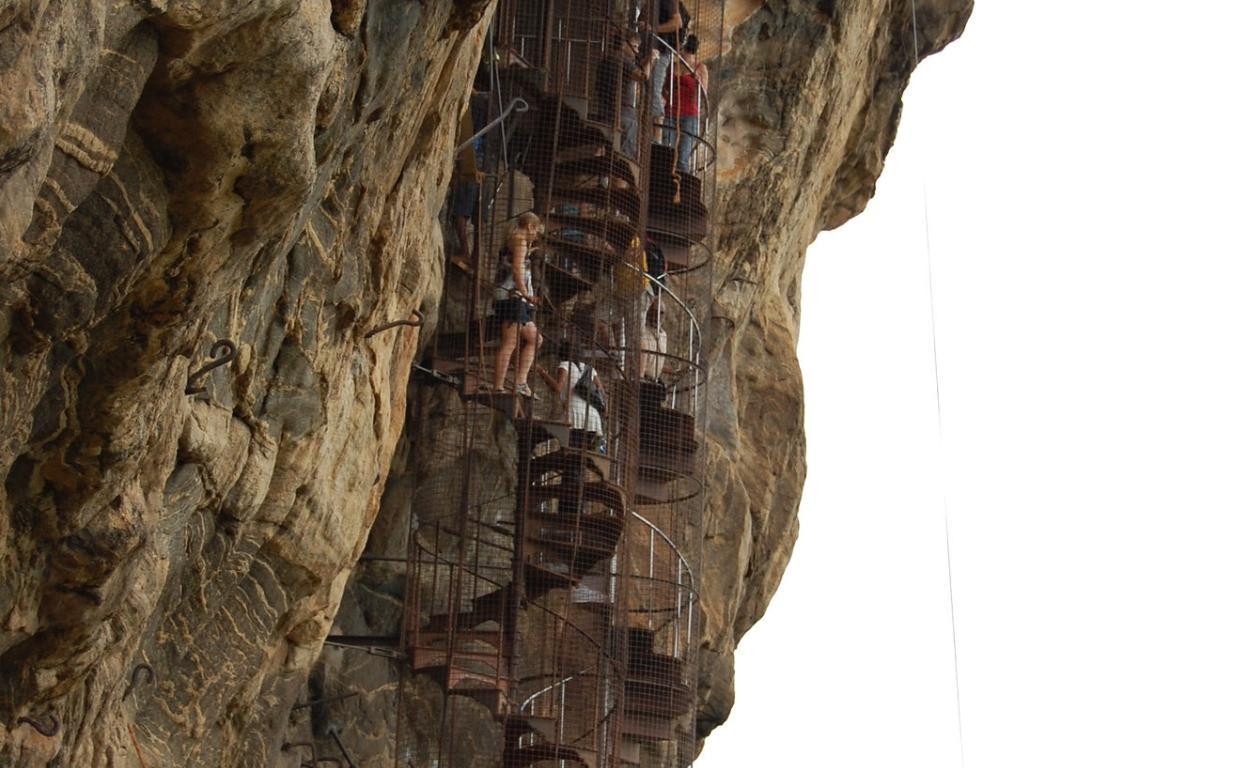
The climb to the palace platform — approximately 1,200 steps over 30–45 minutes, through water gardens, past the famous Sigiriya Damsels frescoes (apsaras painted in vivid ochre and red on a sheltered rock face, among the finest examples of ancient South Asian painting in existence), through the Lion's Paw gate (where the staircase passes between two giant carved stone lion paws, the face above long since collapsed), and up spiral metal staircases along the vertical rock face — is one of the great ancient monument experiences in Asia. The summit reward is a 360-degree panorama of the Sri Lankan jungle, stretching to the horizon in every direction, and the footprint of the palace complex itself: throne room, swimming pool (fed by an ingenious rainwater collection system that still functions), royal quarters — all 5th century, all 200 metres above the surrounding plain.
The Climb & What You'll See
The Sigiriya experience unfolds in layers as you ascend. The lower water gardens — elaborate formal gardens of symmetrical pools, fountains (the fountain jets still function during the rainy season, propelled by the original hydraulic system of underground clay pipes) and boulder gardens — are among the oldest landscaped gardens in the world and remarkable in their sophistication. The Mirror Wall (a polished lime plaster wall that once reflected the king's image perfectly) carries ancient graffiti dating from the 7th–10th centuries — visitors in the early medieval period left verses on the wall as they climbed, creating an accidental poetry archive now studied by scholars.
The Sigiriya Damsels — approximately 21 surviving figures from an original estimated 500 fresco paintings that covered the entire western face of the rock — are sheltered in a recessed gallery reached by a spiral staircase about halfway up the main rock. The paintings depict beautiful women (variously interpreted as apsaras, heavenly nymphs, or the king's consorts) in vivid natural pigments of ochre, red, yellow and green, their faces, hands and ornaments rendered with extraordinary delicacy. Photography restrictions apply to protect the pigments.
Practical Climbing Details
The climb to the summit takes 30–45 minutes ascending and 20–30 minutes descending. The staircases are metal and well-maintained, with handrails throughout, but some sections are steep and exposed — those with a severe fear of heights may find certain sections challenging. The summit is entirely open to the elements and lacks shade. Start before 7am to avoid the combination of heat (Sigiriya gets extremely hot by 10am) and crowd (the tourist buses arrive between 9am and 11am). The entry fee is US$30 (approximately £23) for international visitors — high by Sri Lankan standards but the site fully justifies it.
Combining Sigiriya with the Cultural Triangle
Sigiriya is the jewel of Sri Lanka's Cultural Triangle and best visited in combination with the other major sites of the north-central plains. Dambulla Cave Temple (15km south) — five cave temples with 153 Buddha statues and 2,100 square metres of ceiling paintings, the finest rock temple complex in Sri Lanka — is a natural companion to Sigiriya and the day's first visit before the heat builds. Polonnaruwa (60km southeast) is the best-preserved medieval city in Sri Lanka, its carved Buddha images and mandapas extraordinary. Anuradhapura (70km northwest) has the ancient stupas and sacred Sri Maha Bodhi tree (grown from a cutting of the tree under which the Buddha achieved enlightenment — the oldest historically documented tree on earth, planted in 288 BCE). A three-day Cultural Triangle circuit covers all four sites.