Kyoto — Japan's imperial capital for eleven centuries (794–1869 CE) and the city that, through extraordinary fortune and an American art historian's intervention, survived World War Two's strategic bombing campaigns with its historic core largely intact — is the greatest concentration of traditional Japanese culture on earth. Its 17 UNESCO World Heritage sites include some of the most beautiful buildings in Asia; its 1,600 Buddhist temples and 400 Shinto shrines span a millennium of architectural evolution; its surviving geisha districts (particularly Gion), traditional craft industries (Nishijin silk weaving, Kyo-yaki pottery, Kyoto dyeing), tea ceremony culture, kaiseki cuisine and noh theatre constitute a living civilisation of extraordinary depth and refinement. To come from Tokyo to Kyoto is to travel 2.5 hours by Shinkansen through a thousand years in cultural time.
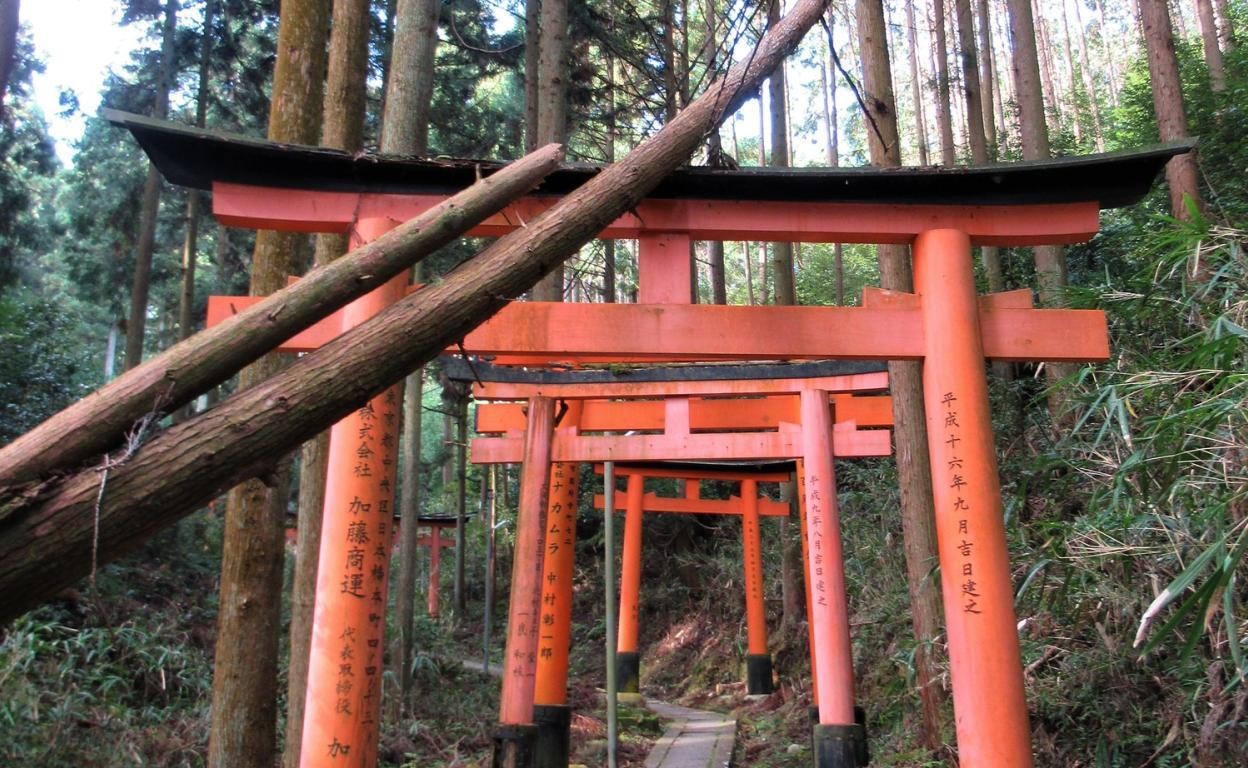
Fushimi Inari-taisha — the head shrine of the approximately 32,000 Inari shrines across Japan, dedicated to the fox deity Inari (associated with rice, agriculture and business prosperity) — has the most famous single sight in Kyoto: the Senbon Torii, an almost unbroken corridor of approximately 10,000 vermilion torii gates winding 4km up the forested slopes of Mount Inari. The gates are donated by businesses seeking Inari's blessing, each bearing the donor's name and the date of donation — the earliest surviving gates date from the 18th century. The lower section (to the first of the sub-shrines, Okusha) is always crowded; the upper mountain (a 2–3 hour round trip) is significantly quieter and rewards with deeper forest and occasional city views through the trees.
Kinkaku-ji, Ryoan-ji & Arashiyama
Kinkaku-ji (the Golden Pavilion) — a 14th-century Zen Buddhist temple whose top two storeys are entirely covered in gold leaf, reflected in the Kyokochi garden pond below — is Japan's most visited sight and the closest thing the country has to a universal symbol. The crowds are unavoidable (3–4 million visitors annually) but the sight itself is genuinely remarkable; arriving at the 9am opening limits the queue somewhat. Ryoan-ji, 10 minutes away, has Japan's most famous karesansui (dry rock garden) — 15 stones arranged in raked white gravel in a configuration that ensures at least one stone is always hidden from any single viewpoint, a puzzle that has resisted definitive interpretation for 500 years. The contemplative silence of the garden (despite the tourist presence) is itself a kind of experience.
Arashiyama — the wooded hills at Kyoto's western edge — has the famous bamboo grove (a 500-metre path through towering bamboo that creates an extraordinary tunnel of green light, best at dawn before it fills) and the Tenryu-ji temple garden (the finest garden in the Arashiyama area, with the hills as borrowed scenery), as well as the monkey park (wild Japanese macaques on the hillside above the grove) and the quiet Sagano bamboo forest walking path. The Togetsu-kyo bridge over the Oi River at Arashiyama — framed by cherry blossoms in spring and maple foliage in autumn — is one of Japan's great scenic photographs.
Gion, Nishiki Market & Geisha Culture
Gion — Kyoto's preserved geisha district, centred on Hanamikoji Street and Shimbashi — has the most atmospheric streetscape in Japan: traditional machiya townhouses and ochaya (tea houses) of dark timber and white plaster, stone-flagged streets, red paper lanterns reflecting in puddles. Geiko (Kyoto's term for geisha) and maiko (apprentice geisha) are still regularly visible in Gion during the evenings, particularly near Ichiriki Chaya (Kyoto's most famous ochaya, established 1700) and along the canal streets of Shimbashi. The Gion Matsuri festival in July — one of Japan's three great festivals — fills the central streets with ornate processional floats (yamaboko) and crowds of yukata-clad residents.
Nishiki Market — a covered arcade of approximately 100 stalls running five blocks through central Kyoto — sells Kyoto's distinctive food culture in its most concentrated form: house-made tofu, tsukemono (Kyoto pickles), fresh yuba (tofu skin), wagashi confectionery, dashi stock, Kyoto-style sushi. Walking and eating through Nishiki is one of the best introductions to Kyoto's culinary identity.
Seasonal Highlights
Kyoto's seasons are its greatest attraction: cherry blossom season (late March–mid April) transforms the Philosopher's Path (a canal-side walk lined with hundreds of cherry trees), the Maruyama Park weeping cherry and Arashiyama into something breathtakingly beautiful — and draws enormous crowds. Book accommodation six months ahead for sakura season. Autumn foliage (typically mid-November) turns the temple garden maples from green through orange to brilliant red — Tofuku-ji's corridor garden and Eikan-do's hilltop maple forest are the finest autumn foliage sites in the city. Summer is hot and humid (35°C) but brings the Gion Matsuri and elegant Gozan no Okuribi (Daimonji fire festival) in August. Winter is cold but quiet — snow on temple roofs and gardens is extraordinarily beautiful and uncrowded.