Hiroshima — the first city in history to be destroyed by an atomic bomb (6 August 1945, 8:15am) — is, paradoxically, one of the most life-affirming cities in Japan: a modern, vibrant, forward-looking city that has rebuilt itself entirely in the seven decades since its destruction and now exists partly as a living monument to the idea that recovery, reconciliation and peace are possible in the aftermath of the worst things that human beings do to each other. The Peace Memorial Park and Museum at the epicentre of the atomic explosion are among the most powerful historical sites in the world — not easy visiting, but important visiting, and done by most visitors with a depth of feeling that surprises them.
Thirty minutes by ferry from Hiroshima lies Miyajima (Itsukushima) — a sacred island whose centrepiece, the O-Torii gate of Itsukushima Shrine, stands in the tidal waters of the Seto Inland Sea and is one of Japan's most instantly recognisable images: the enormous vermilion gate, reflected in the calm water at high tide or rising from the tidal flats at low tide (when visitors walk directly to its base), with the island's forested mountains behind it. The combination of Hiroshima and Miyajima in a single day (or better, overnight on the island) makes one of the most emotionally and visually complete days in Japan.
Peace Memorial Park & Museum
The Hiroshima Peace Memorial Park occupies the area closest to the hypocentre of the atomic explosion — the A-Bomb Dome (Genbaku Domu), the skeletal remains of the Industrial Promotion Hall, deliberately left in its destroyed state as a permanent memorial, is the park's most powerful sight. The dome, with its exposed steel framework and ruined walls preserved exactly as they stood in the seconds after the blast, is a UNESCO World Heritage site and a genuinely haunting presence at the head of the park's main axis. The Hiroshima Peace Memorial Museum — divided into east and west buildings, the west reopened after renovation in 2019 — documents the city's history before and after 6 August 1945 with extraordinary care: personal effects of victims, photographs, testimonies, and the physical evidence of the bomb's effects on the human body and on a city.
The Children's Peace Monument — dedicated to Sadako Sasaki, the 12-year-old girl who developed leukaemia as a result of radiation exposure and spent her final year folding origami cranes in the belief that she would be granted a wish (traditionally 1,000 cranes) — is surrounded by strings of paper cranes sent by schoolchildren from around the world. The flame at the Memorial Cenotaph — burning since 1964 and intended to burn until the last nuclear weapon on earth is destroyed — is the park's most morally significant fixture.
Miyajima & Itsukushima Shrine
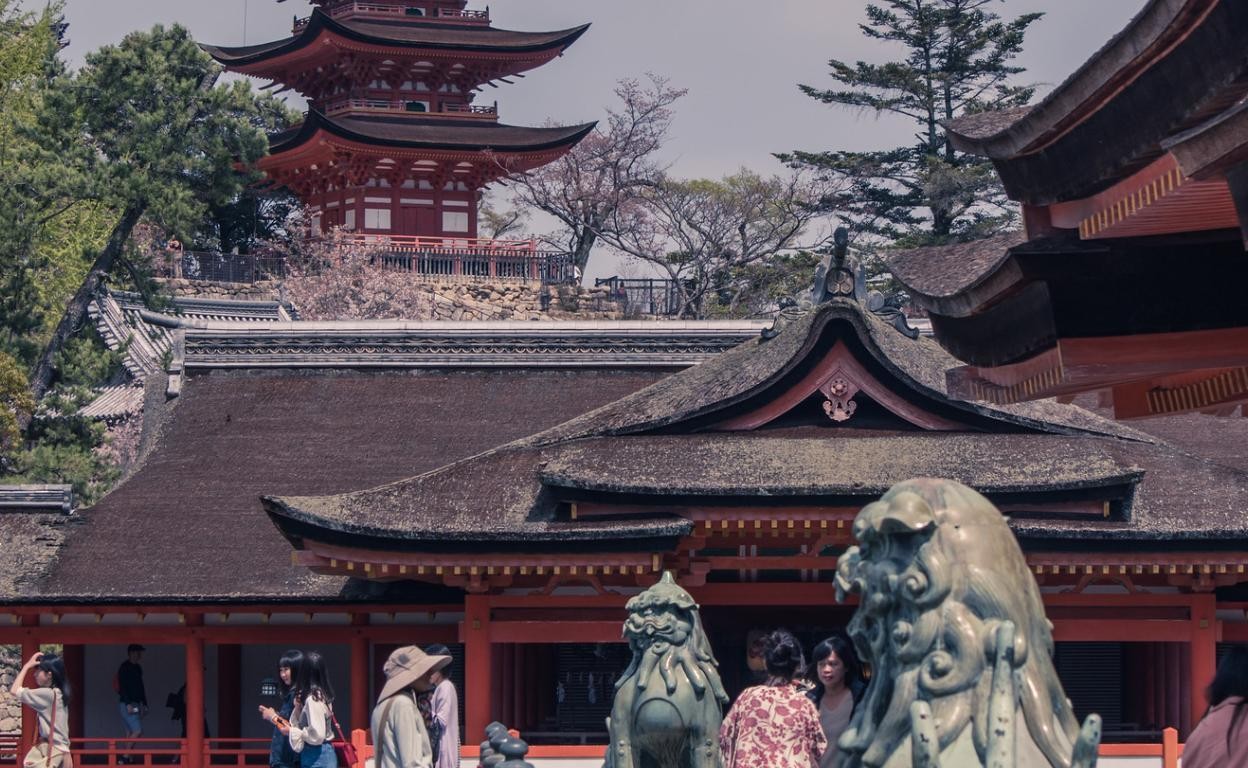
Miyajima island (official name Itsukushima) is reached by a 10-minute ferry from Miyajimaguchi — the island is classically Japanese in its atmosphere: tame deer wander the streets (like Nara's, they are sacred and entirely unafraid), the waterfront shopping street leads to the Itsukushima Shrine complex, and the forested mountain of Mount Misen (535m, accessible by ropeway) rises above. The O-Torii gate of Itsukushima Shrine — currently the fourth gate to stand on this site, dating from 1875, 16 metres tall and weighing 60 tonnes — stands approximately 200 metres offshore and is accessible at low tide on foot. The shrine itself (founded 593 CE, rebuilt in its current form in 1168) sits on stilts over the tidal flats, its vermilion colonnades reflected in the water at high tide in one of Japan's most photographed compositions.
Hiroshima's Own Culture
Beyond the Peace Park, Hiroshima has its own culinary identity: Hiroshima-style okonomiyaki (the savoury pancake is made with layered noodles here, distinct from Osaka's mixed version) is the city's most celebrated food, and Okonomimura (a five-storey building of okonomiyaki stalls in central Hiroshima) is the definitive place to eat it. Hiroshima ramen (with a soy-based broth and flat noodles) is also excellent. The Shukkei-en garden (a traditional strolling garden of 1620, severely damaged by the bomb and restored) and the Hiroshima Museum of Art (Impressionist collection) provide cultural options beyond the Peace Park for those spending more than a day.