Las Vegas is unlike anywhere else on earth — a city that erupted from the Nevada desert in the mid-20th century to become the world's entertainment capital, a place where every human impulse towards spectacle, excess and pleasure has been amplified to its logical extreme. The Strip (Las Vegas Boulevard South), a 6.8km corridor of themed mega-resort hotel-casinos, contains more hotel rooms than all of Paris, more restaurants than many major cities, and an unbroken sequence of architectural fantasies that must be seen at night to be believed — when the neon, LED displays and searchlights transform the desert into something between an amusement park and a hallucination.
But Las Vegas is also, perhaps surprisingly, one of the world's finest bases for exploring extraordinary natural landscapes. The Grand Canyon South Rim is a 4-hour drive (or 45-minute helicopter flight); Zion National Park's vermilion slot canyons are 2.5 hours east; Bryce Canyon's hoodoo amphitheatres are 3 hours; the Hoover Dam is 45 minutes; Red Rock Canyon's sandstone formations are 30 minutes. No city on earth places its visitors so close to such a concentration of natural wonders while also offering world-class dining, entertainment and shopping within walking distance of the hotel bed.
The Las Vegas Strip
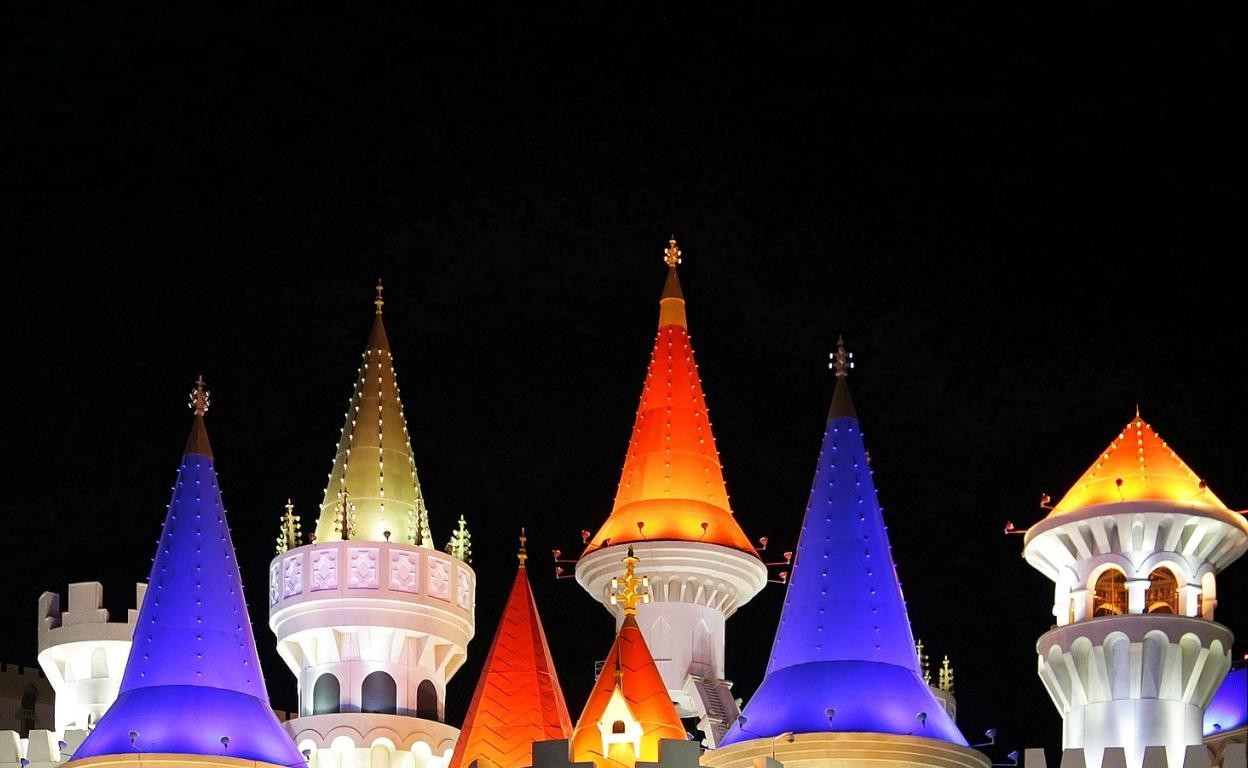
The Strip's mega-resorts are themselves the primary attraction — architectural fantasies themed to Paris (the Eiffel Tower replica at Paris Las Vegas is two-thirds scale), Venice (the Venetian's indoor Grand Canal with gondoliers), New York (the New York-New York roller coaster loops past a Manhattan skyline replica), ancient Egypt (the Luxor pyramid with its upward-pointing light beam, visible from aircraft) and medieval England (the Excalibur's turrets). The Bellagio, arguably the Strip's grandest property, has the famous choreographed fountain display (free, every 15 minutes in the evening) set on an 8-acre artificial lake. The Bellagio Gallery of Fine Art within the hotel has hosted remarkable travelling exhibitions.
The Sphere — opened in 2023 on the east side of the Strip — is the world's largest spherical structure: a 111-metre LED globe visible from aircraft 160km away, with the world's highest-resolution indoor screen (1.2 million pixels) hosting immersive concert experiences. Fremont Street in downtown Las Vegas (distinct from the Strip) is covered by the Fremont Street Experience — a 460-metre LED canopy playing light-and-sound shows, with the original old-Vegas casinos beneath it and a zip-line running the length of the canopy.
The Grand Canyon
The Grand Canyon — 446km long, up to 29km wide and 1,800 metres deep — is a geological record covering 2 billion years of Earth's history, carved by the Colorado River over 5–6 million years. Standing at the South Rim's Mather Point (the main viewpoint, 30 metres from the car park) and looking into the canyon for the first time is one of the great visceral experiences in travel — the scale is so far beyond normal human reference points that the brain struggles to process it as real landscape rather than a backdrop. The sequence of colours — the pink Kaibab limestone at the rim, the red Coconino sandstone, the purple Hermit Shale, the green Tonto Platform, the dark Vishnu Schist at the bottom — tell the geological story visually as you descend.
Day trips from Las Vegas to the South Rim (4 hours each way) are possible but rushed; a night at the canyon — at El Tovar Lodge on the rim, or at Phantom Ranch at the canyon bottom (book months ahead) — rewards with the dawn and sunset light transforming the rocks through extraordinary sequences of colour. The Bright Angel Trail (the main hiking trail into the canyon) is a genuine wilderness experience; no day hiker should attempt to reach the Colorado River and return in a single day — the Canyon Rescue Service handles dozens of heat-exhaustion evacuations annually from people who underestimated the return climb in summer heat.
Zion, Bryce Canyon & the Southwest
Zion National Park — 2.5 hours from Las Vegas — is America's most-visited national park and deservedly so: the Virgin River has carved the Zion Canyon through Navajo sandstone, creating a narrow gorge of extraordinary beauty. The Narrows — a slot canyon hike through ankle-to-chest-deep water between walls of 300-metre sandstone — is one of America's finest hikes and requires no technical skill (waterproof shoes or hired canyoneering boots, a hiking pole and a willingness to get wet). Angels Landing — a 7.3km round trip with 488 metres of ascent and a final chain-assisted section along a knife-edge ridge — is one of the most exhilarating hikes in North America and now requires a permit (ballot system).
Bryce Canyon, a further hour east, is geologically distinct from Zion — not actually a canyon but the eroded edge of the Paunsaugunt Plateau, where 8,000+ orange, pink and white hoodoo spires rise from the amphitheatres below the rim. Sunrise at Bryce Point or Inspiration Point, when the first light catches the hoodoos, is among the American Southwest's defining visual experiences. Antelope Canyon (Page, Arizona, 3 hours from Las Vegas) — the famous slot canyon of swirling orange rock lit by shafts of light — is the most photographed canyon in the American Southwest and requires a Navajo guided tour (book months ahead for the light-shaft tours at midday).