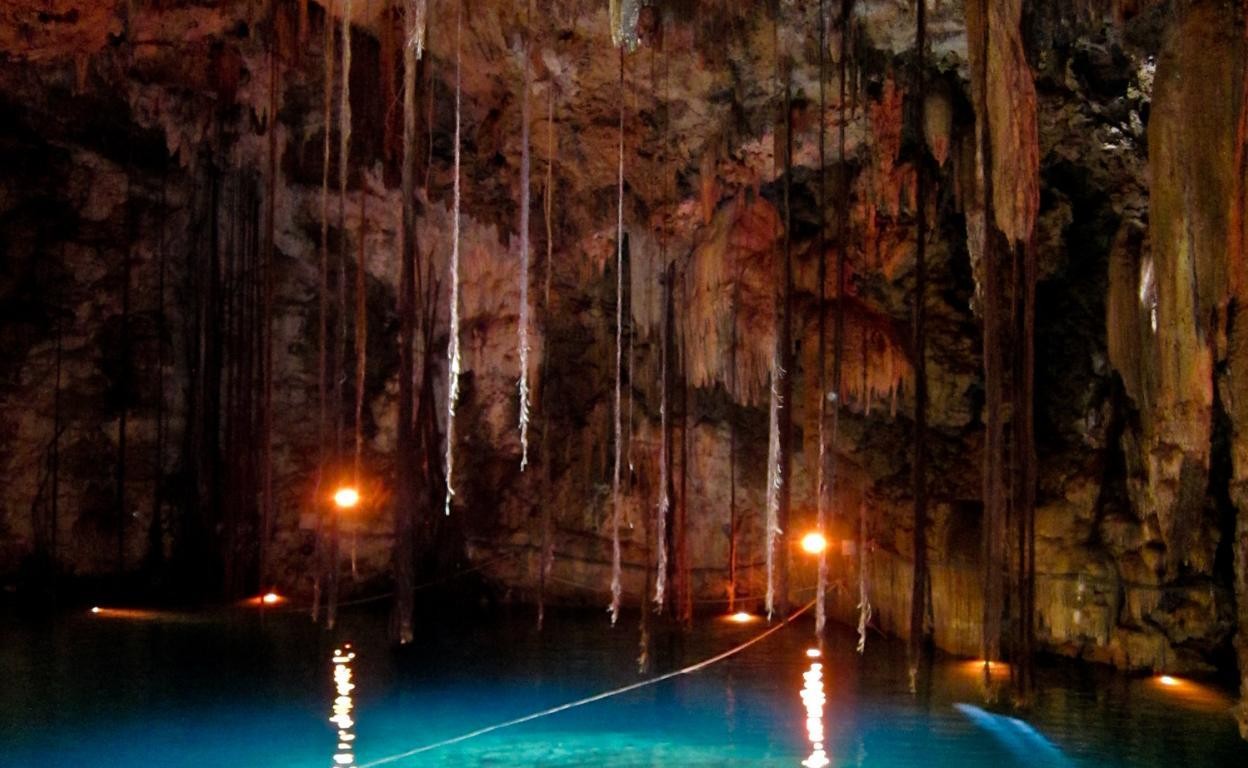
Cenotes — natural sinkholes formed when the thin limestone crust of the Yucatán Peninsula collapses to reveal the underground river system below — are one of Mexico's most extraordinary natural features and one of the Yucatán's most magical swimming experiences. The water in cenotes is crystal-clear (filtered through limestone over thousands of years), perfectly cool (a constant 24–25°C year-round), and in the most beautiful examples, illuminated by shafts of sunlight penetrating the opening above to create an ethereal blue-green glow through the water.
The Yucatán Peninsula has over 6,000 cenotes — the vast cave system beneath it (the world's longest, with over 1,400km of mapped passages) occasionally opens to the surface to create these extraordinary pools. The Maya considered cenotes sacred — portals to Xibalba, the underworld — and used them as sources of fresh water and sites of religious offering. The Sacred Cenote at Chichén Itzá, into which offerings (and people) were thrown, is the most historically significant.
Types of Cenote
Open cenotes are fully exposed to the sky — large circular pools surrounded by vegetation, bright and accessible. Cenote Dos Ojos (south of Tulum) is the finest open cenote in the Yucatán, with two interconnected pools and excellent snorkelling through underwater passages.
Semi-open cenotes have a partial ceiling with dramatic light shafts falling through openings. These are the most photographically spectacular — Cenote Ik Kil near Chichén Itzá, with its hanging vines and dappled light, is the most famous and most visited.
Cave cenotes are completely enclosed underground — accessible by ladder or tight entrance passages, swimming in near-darkness illuminated only by headlamps and torch beams. These appeal to adventure swimmers and divers; the cenote diving network beneath the Yucatán is considered among the world's finest cave diving environments.
Best Cenotes by Location
Near Tulum: Gran Cenote (3km from ruins — open, excellent snorkelling, manageable crowds early), Dos Ojos (twin pools, both outstanding, arrive at opening), Cenote Calavera (skull-shaped opening, one pool).
Near Valladolid: Cenote Zací (in town, atmospheric cave cenote), Cenote Suytun (dramatic column and light shaft — often featured in photographs).
Near Chichén Itzá: Cenote Ik Kil (most famous, often crowded with tour groups, arrive early for best experience).
Near Playa del Carmen: Aktun Chen (protected park with cenote and caves), Hidden Worlds (excellent guided cave snorkelling).
Responsible Cenote Visiting
Cenotes are fragile ecosystems — the underground river system they connect to supplies drinking water to much of the Yucatán Peninsula's population. Swimming with sunscreen (which creates a chemical film on the water surface) is actively harmful; biodegradable sunscreen is available in most Yucatán towns and should be used if swimming in cenotes. Many cenotes now require showering before entry. Respect any "no jumping" rules at smaller or shallower cenotes — the water may be shallower than it appears and the rock edges are fragile.