Paris — the capital of France and, by the general consensus of travellers across two centuries, the most beautiful city in the world — is a place where civilisation seems to have achieved a particular density and refinement: the museums are extraordinary (the Louvre is the world's largest and most visited art museum; the Musée d'Orsay the finest collection of Impressionist art), the food is magnificent (from Michelin-starred restaurants to neighbourhood brasseries to the corner boulangerie whose croissants justify the flight), the architecture is the most coherent and beautiful of any European capital (Haussmann's 19th-century boulevards, the Gothic cathedrals, the Belle Époque metro stations, the Eiffel Tower), and the cultural life is inexhaustible — theatre, opera, fashion, cinema, philosophy, art — all at a level that makes Paris a city worth returning to indefinitely.
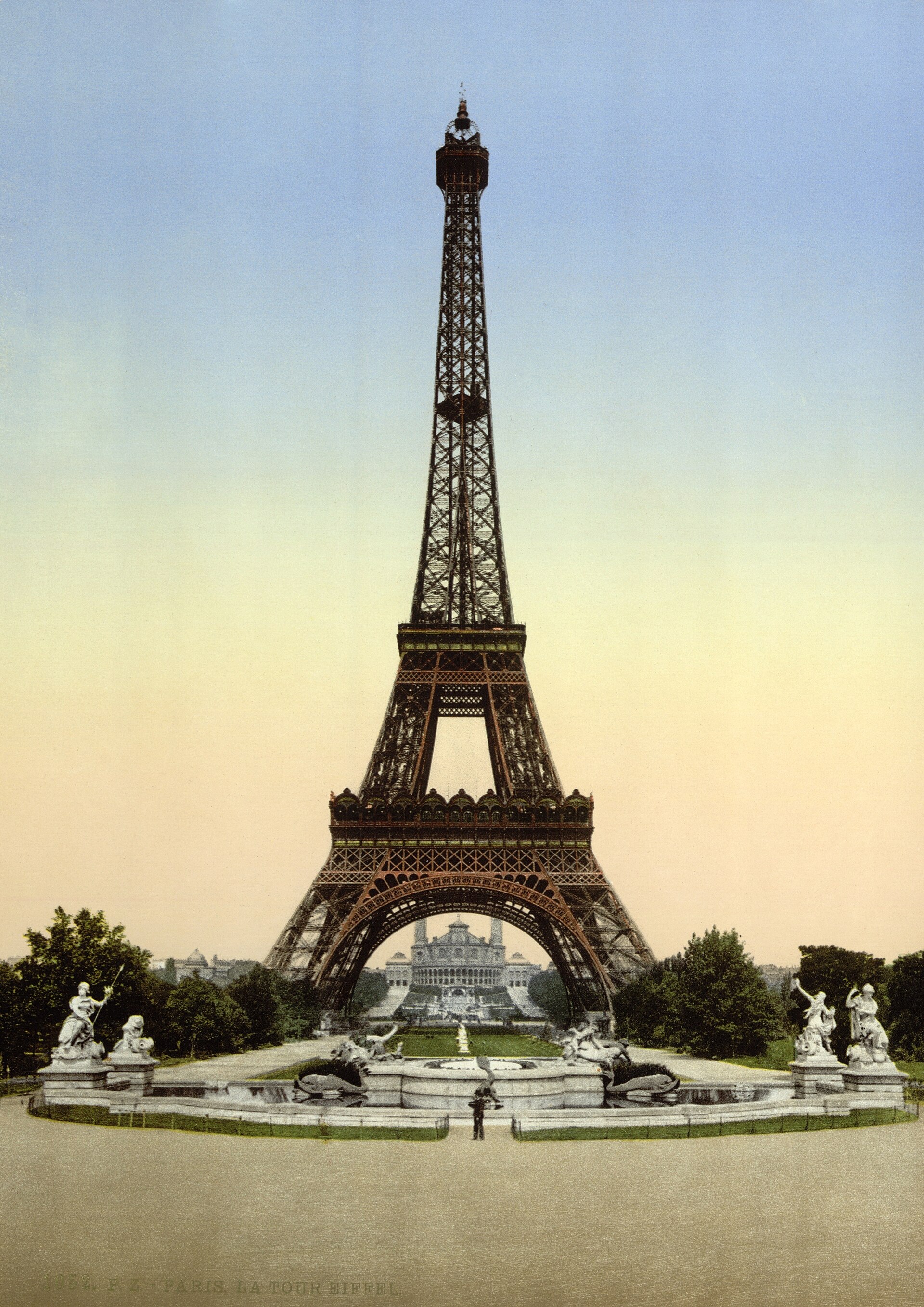
The Eiffel Tower — Gustave Eiffel's wrought-iron lattice tower built for the 1889 World's Fair, originally intended to be dismantled after 20 years and reprieved by its utility as a radio mast — is the world's most visited paid monument (7 million visitors annually) and the defining symbol of Paris. It is beautiful from a distance (particularly illuminated at night when it sparkles for 5 minutes on the hour), vertiginous and thrilling from the 276-metre summit, and surrounded by one of Paris's finest open spaces on the Champ de Mars. From the Trocadéro esplanade across the Seine, at dawn before the crowds arrive, with the tower reflected in the fountains below and the morning sky behind it, it remains one of the great sights of the world.
The Louvre, Musée d'Orsay & Notre-Dame
The Louvre — the former royal palace converted to a public museum in 1793, now housing 35,000 works of art from antiquity to 1848 in 72,735 square metres — is the world's largest art museum and one of the great cultural institutions of civilisation. The Mona Lisa, the Venus de Milo, the Winged Victory of Samothrace, Vermeer's The Lacemaker, the Coronation of Napoleon by David, the Code of Hammurabi — the concentration of significant human achievement under a single roof is genuinely humbling. Allow at least 4 hours; book timed entry tickets in advance online. The Musée d'Orsay (in a converted Beaux-Arts railway station) holds the world's greatest collection of Impressionist and Post-Impressionist art: Monet's series paintings (Rouen Cathedral, Poplars), van Gogh's Bedroom in Arles and Starry Night over the Rhône, Renoir, Degas, Seurat's A Sunday Afternoon — the collection is extraordinary and the building magnificent.
Notre-Dame Cathedral — severely damaged by fire in April 2019 and reopened after extraordinary restoration in December 2024 — is medieval Gothic architecture at its most ambitious: the flying buttresses, the rose windows, the gargoyles and the interior's towering nave constitute one of the finest buildings in the world. The completion of the restoration, including the reconstruction of Viollet-le-Duc's 19th-century spire, has been one of France's greatest recent cultural achievements.
Montmartre, the Seine & Neighbourhoods
Montmartre — the hill village above northern Paris, crowned by the white Sacré-Coeur basilica — retains the character of the artistic community that made it famous in the late 19th and early 20th centuries: Picasso and Braque developed cubism in a studio on the Rue Ravignan, Toulouse-Lautrec documented the Moulin Rouge from bars along the Boulevard de Clichy. The steep streets behind Sacré-Coeur, the Place du Tertre with its portrait painters, and the vineyard on the Rue des Saules have an authenticity that the tourist saturation of some areas diminishes but cannot destroy. The Seine — the river that bisects Paris and defines its identity — is best experienced by Batobus river bus (hop-on, hop-off, 8 stops from Eiffel Tower to Jardin des Plantes), by walking the renovated riverbanks (Paris Plage in summer, when sand is deposited on the banks), or on a Bateaux Mouches evening cruise with the illuminated monuments reflected in the water.
Food & Practical Details
Paris's food culture operates at every level: the café crème and croissant breakfast (£3–5 standing at the bar of any neighbourhood café), the prix fixe lunch (£12–18 at a neighbourhood brasserie, typically 3 courses), the Michelin-starred dinner (£80–300 per person at the city's 120+ starred restaurants). The practical middle ground — the brasseries of Saint-Germain-des-Prés, the bistros of the 11th arrondissement, the covered market halls (Marché des Enfants Rouges, Marché d'Aligre) — provides excellent French food at reasonable prices. Paris is also the world capital of the cheese shop (fromagerie), the wine bar (cave à vins) and the pâtisserie — the window of Pierre Hermé or Ladurée is a world in itself. The Eurostar from London St Pancras arrives at Paris Gare du Nord in 2 hours 20 minutes — the most civilised possible way to begin a Paris visit.