Fez el-Bali — the ancient walled medina of Fez — is the world's largest living medieval city and Morocco's most extraordinary urban experience. Founded in the 9th century, it has barely changed in its fundamental structure and function for over a millennium: the same alleys (over 9,000 of them, many too narrow for a laden donkey), the same trades conducted in the same locations, the same mosques, madrasas and fountains serving the same residential quarters. Walking into Fez el-Bali is the closest thing available to genuine time travel.
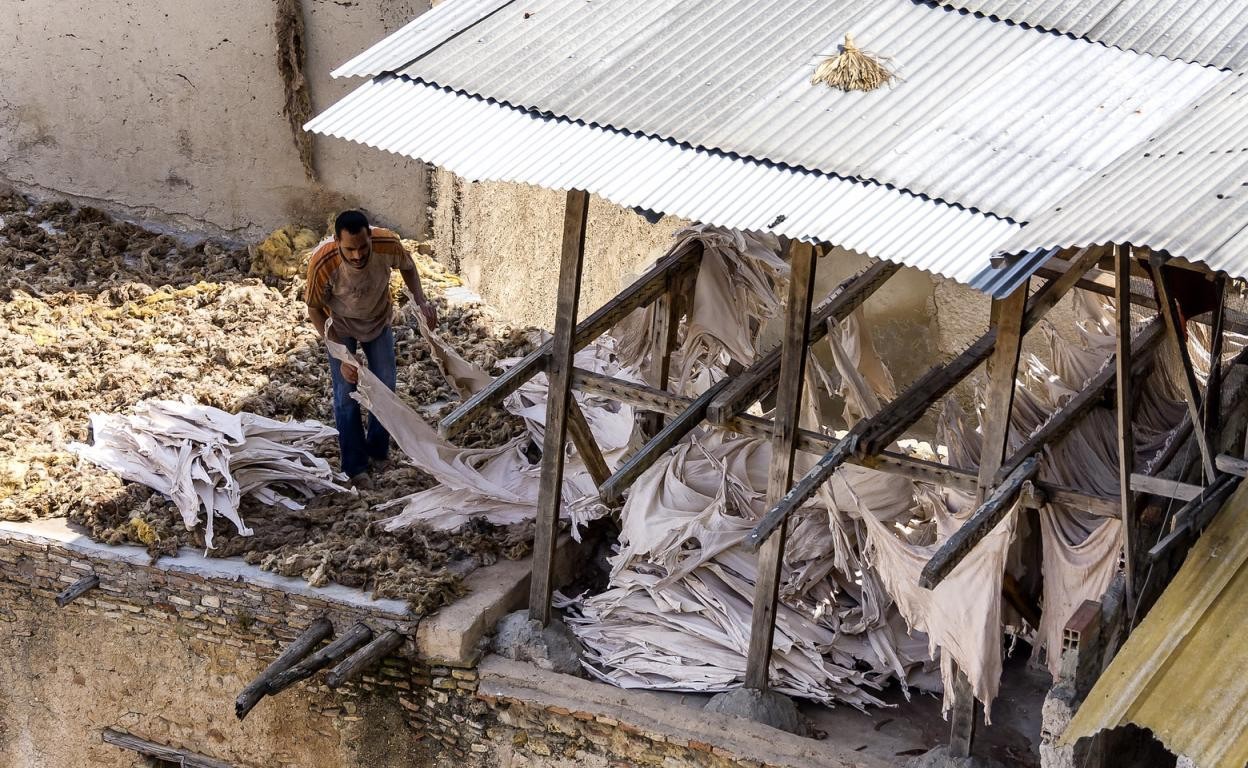
The Chouara Tanneries — a working leather dyeing complex that has operated continuously since the 11th century — are Fez's most iconic sight. Seen from the surrounding balconies of leather shops (where the pungent aroma of the dyeing process is mitigated by sprigs of fresh mint helpfully provided to visitors), the circular stone honeycomb vats filled with coloured pigments — natural dyes of saffron, indigo, pomegranate and poppy — create one of the world's most recognised photographic images.
Navigating Fez el-Bali
Getting lost in Fez is not an accident — it is the experience. The medina has no logical street grid and GPS is minimally useful in the densely packed urban fabric. Hiring a licensed guide (from the official tourism office) for the first day is both practical and enriching; experienced guides reveal the medina's logic — the way trades cluster, the gradations of neighbourhood status, the buildings hidden behind blank walls — that would be invisible to an unguided visitor. After a guided introduction, exploring independently becomes both possible and deeply rewarding.
The main route from Bab Bou Jeloud (the Blue Gate, the main entry point) to the tanneries via the central souk is well enough known that it can be followed independently, but the real Fez lies in the residential quarters away from the tourist spine.
The Madrasa & Sacred Sites
The Bou Inania Madrasa — a 14th-century Islamic school adjacent to the main souk — is the finest example of Merenid architectural decoration in Morocco: walls of intricate zellige tilework rising to a band of carved plaster above and then cedar latticework to the vaulted ceiling. Non-Muslims can enter this building (unlike most Moroccan sacred sites) and should; the central courtyard with its fountain and the students' balconied cells above provide an extraordinary sense of a medieval seat of Islamic learning.
The Kairaouine mosque and university — founded in 859 CE and often cited as the world's oldest continuously operating university — can only be glimpsed through doors by non-Muslims, but the glimpse (and the understanding that this institution was a global centre of learning when Oxford was a village) is powerful.