In This Article
Lithuania is one of Europe's best-kept secrets — and one that is finally getting the attention it deserves. The country's capital, Vilnius, has a UNESCO-listed Old Town that rivals Krakow and Prague in beauty and historical depth, yet receives a fraction of the visitor numbers. Combined with a trio of extraordinary day-trip destinations — a Gothic island castle, a hill covered in hundreds of thousands of crosses, and a UNESCO-listed peninsula of giant sand dunes — Lithuania makes a compelling case as the Baltic's finest holiday destination.
It also happens to be excellent value. Lithuania is among the more affordable EU countries for UK travellers, with hotel prices, restaurant bills and transport costs well below Western European levels. And with direct budget flights from London taking just three hours, there are few destinations on the continent that offer as much reward for as little effort and expense to reach.
Why Lithuania?
The Baltic states — Estonia, Latvia and Lithuania — have spent years trying to escape the long shadow of Cold War associations. Lithuania has arguably done so most successfully. Its capital is a genuinely thriving European city: creative, youthful, full of excellent restaurants and bars, with an arts scene that punches well above its weight. The Old Town is not preserved in amber — it's a living, breathing neighbourhood where locals actually live and work, making for a more authentic experience than in many more heavily touristed European capitals.
Beyond Vilnius, Lithuania rewards those who venture further. The countryside is beautiful in an understated northern way — rivers, forests, amber-coloured lakes — and several of the country's major attractions rank among the most distinctive travel experiences anywhere in Europe. You'd be hard pressed to find anything quite like the Hill of Crosses or the Curonian Spit on any other European itinerary.
💶 Value for money: Lithuania uses the Euro (€), and prices are significantly lower than in Western Europe. You'll find good restaurant meals for €10–15, local craft beer for €3–4, and comfortable hotels in Vilnius Old Town for €50–80 per night. A five-night trip including flights regularly comes in under £500 per person.
Best Time to Visit Lithuania
Lithuania has a continental climate with four proper seasons. The extremes — cold grey winters, hot humid summers — are worth understanding before you book.
🌸 Spring (May–June) — BEST
The finest time to visit. Temperatures reach 18–24°C, the city's parks and courtyards are in full bloom, and the long daylight hours (up to 17 hours in June) give you maximum time to explore. Pre-summer prices and lighter crowds make it especially appealing.
🍂 Early Autumn (September) — BEST
Warm but not hot (16–20°C), golden foliage beginning to appear, and the summer crowds have thinned. September is arguably the most atmospheric time to explore Vilnius Old Town. Prices dip meaningfully from August highs.
☀️ Summer (July–August)
Warmest period (22–28°C), with the Baltic Sea coast and Curonian Spit at their best. Vilnius hosts outdoor festivals and events throughout July and August. Accommodation prices are at their peak and city crowds are at their heaviest.
❄️ Winter (December–March)
Cold, often snowy, and dark (sunrise after 9am in December). But Vilnius at Christmas is genuinely magical — a beautiful outdoor market in Cathedral Square, excellent mulled wine, and a city that feels authentically European in winter. Prices are at their lowest.
Vilnius
Vilnius — Lithuania's UNESCO Capital
🇱🇹 Capital city — plan at least 2–3 days
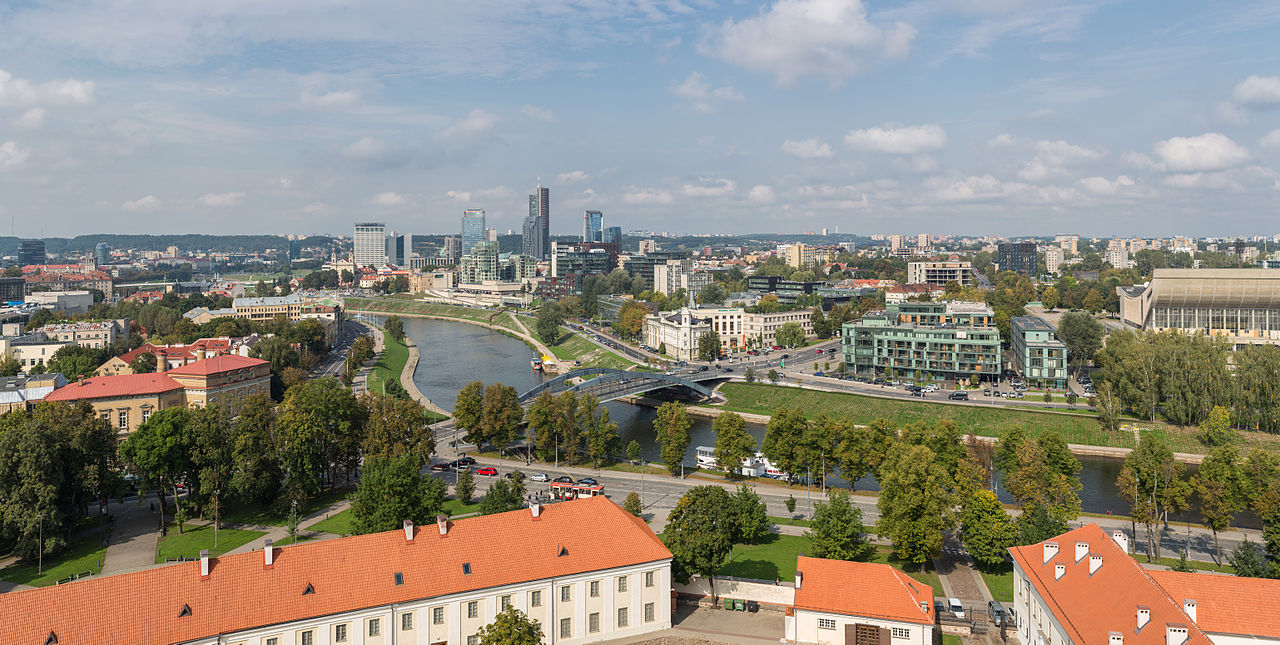
Vilnius has one of the largest surviving medieval Old Towns in Europe — a sprawling, hilly labyrinth of Baroque churches, cobbled alleyways, Renaissance courtyards and Gothic spires that UNESCO listed as a World Heritage Site in 1994. Unlike some European old towns that have become open-air museums, Vilnius's feels alive: coffee shops and wine bars occupy the ground floors of 16th-century buildings, street art brightens backyard passages, and locals cycle and stroll through the lanes on their daily business.
Cathedral Square is the natural starting point — a grand baroque cathedral flanked by a distinctive white bell tower, surrounded by open space that serves as the social heart of the city. From here, the medieval streets of the Old Town spread south and east. Pilies Street is the main artery, lined with amber jewellery shops, bakeries and restaurants. Follow the lanes uphill and you'll reach Gediminas Tower, the remaining turret of the Upper Castle, which offers the finest elevated view over the terracotta rooftops of the Old Town.
St Anne's Church is the architectural highlight of the Old Town — a masterpiece of Baltic Gothic, with an extraordinary facade of red brick and tracery that Napoleon reportedly wanted to carry back to Paris in the palm of his hand. Just beyond it is the Bernardine Church, and together they form a UNESCO-listed church ensemble that stops photographers in their tracks.
For something entirely different, cross the Vilnia River into Užupis — a bohemian neighbourhood that declared itself an independent republic in 1998, complete with its own constitution (displayed on mirrored plaques in multiple languages) and its own 'Angel' statue. It's part art installation, part genuine community of artists and creatives, and one of the most charming corners of any European city.

🚶 Walking tip: Vilnius Old Town is compact and best explored entirely on foot. Wear comfortable shoes — the cobbles are beautiful but uneven. Allow a full day for the Old Town alone; Užupis warrants a dedicated afternoon. The Museum of Occupations and Freedom Fights (the former KGB headquarters) is sobering, important and well worth a half-day visit.
Trakai Island Castle
Trakai — The Fairytale Island Castle
🇱🇹 28km from Vilnius — easy half-day or full-day trip
Trakai is where the postcard version of Lithuania was created. The town, set on a peninsula between a series of beautiful lakes 28km west of Vilnius, is home to Lithuania's most photographed sight: a perfectly preserved 14th-century red-brick island castle rising from the waters of Lake Galvė, connected to the shore by a wooden bridge. On a clear day, with the castle's towers reflected in the lake and rowing boats drifting past, it looks almost too picturesque to be real.
The castle itself is in extraordinary condition for its age — most of it is 14th and 15th century, with significant restoration in the 20th century. Inside, it houses the Trakai History Museum, with exhibits covering the Grand Duchy of Lithuania at the height of its power — a medieval empire that, at its greatest extent, stretched from the Baltic to the Black Sea. The views from the castle towers over the surrounding lakes and forests are excellent.
Don't leave Trakai without trying kibinai — small pastries filled with mutton or curd cheese, a speciality of the Karaim people (a small Turkic community who settled in Trakai in the 14th century). The Kybynlar restaurant on the lakeshore has been serving them for generations and is invariably packed with day-trippers who've been coming for years.

The Hill of Crosses
Hill of Crosses — Europe's Most Extraordinary Pilgrimage Site
🇱🇹 Near Šiauliai — 230km north of Vilnius
There is nothing quite like the Hill of Crosses anywhere else in Europe. On a low mound outside the town of Šiauliai in northern Lithuania, hundreds of thousands of crosses — from tiny devotional pieces to elaborate wrought-iron monuments several metres tall — have been placed by pilgrims over the centuries, creating an extraordinary dense forest of religious symbols that creaks and rattles in the Baltic wind.
The site's origins are ancient, but the crosses took on profound political significance during the Soviet occupation, when the authorities repeatedly bulldozed the hill. Each time, Lithuanians returned overnight and planted more crosses. It became a symbol of national identity and quiet defiance that the Soviets ultimately could not extinguish. Pope John Paul II visited in 1993 and called it "a place of hope, peace, love and sacrifice." The hill has grown continuously since then.
It is one of those rare travel experiences that genuinely transcends visual description — the atmosphere, the scale, the history and the sheer improbability of it all combine into something deeply affecting, regardless of your faith or lack of it. Visiting requires either a day trip from Vilnius (a long but doable round trip by car) or an overnight in Šiauliai.

The Curonian Spit
Curonian Spit — UNESCO Dunes & Baltic Coast
🇱🇹 Neringa — 300km from Vilnius, ferry from Klaipėda
The Curonian Spit is one of the most surreal landscapes in Europe: a 98km-long narrow peninsula of pine forest and colossal shifting sand dunes, sandwiched between the Baltic Sea and the Curonian Lagoon. The Lithuanian section (the northern half; the southern portion is Russian Kaliningrad) is a UNESCO World Heritage Site, and the main resort town of Nida has a quiet, painterly beauty quite unlike anywhere else on the continent.
The dunes here are extraordinary — the Parnidis Dune near Nida rises to 52 metres and offers sweeping views across an otherworldly desert-meets-sea landscape that feels entirely out of place this far north. Walking the dune ridge at sunset, with the lagoon on one side and the Baltic on the other, is an experience that stays with you. The Thomas Mann House in Nida — where the German Nobel laureate spent three summers in the early 1930s — is a pleasant small museum and a reminder of the spit's long history as a retreat for northern European intellectuals.
The spit is best visited in summer (July–August) when the sea temperature reaches 18–20°C and the pine-shaded beaches are at their best. Spring and autumn offer a more solitary, atmospheric experience. Getting there requires taking a ferry from Klaipėda (Lithuania's main port, directly connected to Vilnius by train).

Kaunas — Lithuania's Second City
Kaunas — Art Deco & Authentic Lithuania
🇱🇹 100km from Vilnius — 1.5 hrs by bus or train
Kaunas is Lithuania's second city, and the one most Lithuanians consider the country's cultural heart. It served as the interwar capital of independent Lithuania (1919–1940) and accumulated an outstanding collection of Art Deco architecture during that period — a legacy that earned Kaunas a UNESCO Creative City of Design designation. The pedestrianised Laisvės Alėja (Freedom Avenue) is one of the finest tree-lined boulevards in the Baltic, flanked by elegant interwar buildings, cafes and boutiques.
Kaunas also has a small but well-preserved medieval Old Town at the confluence of the Neris and Nemunas rivers, anchored by Kaunas Castle (one of the oldest in Lithuania) and the beautiful Gothic-Renaissance Town Hall. The Ninth Fort, a 19th-century fortification turned Nazi extermination site during WWII, is a sobering and important memorial that should not be missed. The city is also notably free of the tourist crowds that have begun to accumulate in Vilnius — a genuinely local experience in a beautiful setting.
Getting There from the UK
Lithuania is one of the most straightforward Baltic destinations to reach from the UK. Vilnius has direct connections from several British airports, and the journey is refreshingly short.
Direct Flights to Vilnius
Ryanair flies direct from London Stansted, Manchester and Edinburgh to Vilnius International Airport (VNO). Wizz Air serves Vilnius from London Luton and several regional UK airports. Flight time is approximately 3 hours from London, slightly longer from Scotland and northern England. Fares on budget carriers start from around £30–50 one way when booked in advance, though prices rise significantly for summer travel if booked late.
No Visa Required
UK passport holders can visit Lithuania and the wider Schengen Area visa-free for up to 90 days in any 180-day period. No registration or advance application is required — simply arrive with a valid passport.
Travelling Within Lithuania
Vilnius is well connected to the rest of Lithuania by a reliable national bus network (Lux Express and Eurolines are the main operators) and a slower but scenic railway. Buses are the faster option for most intercity journeys. For reaching more remote attractions like the Hill of Crosses or the Curonian Spit, hiring a car is the most flexible option — roads are good, driving is straightforward, and prices are modest by Western European standards.
✈️ Booking tip: Book Vilnius flights 6–10 weeks in advance for the best fares. May, June and September offer the best combination of good weather and reasonable prices. Summer (July–August) prices spike significantly on popular routes — book early or consider flying mid-week.
Budget Breakdown
Lithuania offers excellent value compared to most EU destinations. Here's a realistic per-person breakdown for different trip lengths and budgets:
| Category | Budget (£) | Mid-Range (£) | Comfort (£) |
|---|---|---|---|
| Return flights (from London) | £60–100 | £120–180 | £200–280 |
| Accommodation (5 nights, Vilnius) | £100 (hostel/budget hotel) | £200–300 (3-star hotel) | £400–600 (boutique/4-star) |
| Food & drink (5 days) | £80 (local restaurants, markets) | £150 (mix of local & mid-range) | £250 (restaurants, wine) |
| Day trips (Trakai + 1 more) | £20 | £35 | £50 |
| Attractions & activities | £20 | £40 | £70 |
| Total per person (5 nights) | ~£280–320 | ~£545–705 | ~£970–1,250 |
💡 Local tip: Vilnius has a thriving café culture with some of the best coffee in the Baltics at prices that feel remarkable to UK visitors. A flat white costs around €2.50–3. Street food markets around Halės Turgus (the main covered market) offer excellent lunches for €5–8 — try cepelinai (potato dumplings stuffed with meat or curd cheese), the national dish.
Practical Tips for Lithuania
- Currency: Euro (€). Cards widely accepted in Vilnius and larger towns; carry some cash for markets, small restaurants and rural areas
- Language: Lithuanian is the official language — not easy, but English is widely spoken in Vilnius, especially by people under 40. In rural areas, Russian is more useful than English
- Safety: Lithuania is a very safe country. Violent crime is rare. Normal city-centre precautions apply regarding pickpocketing, particularly in the Old Town in summer
- Tipping: A 10% tip is expected and appreciated in restaurants. Not obligatory for taxis or bars
- Getting around Vilnius: The Old Town is compact and best explored on foot. City buses and trolleybuses are cheap and reliable for reaching areas outside the Old Town. Taxis are reasonably priced — use the Bolt app (cheaper and more transparent than flagging one down)
- Amber: Lithuania is one of the world's largest sources of Baltic amber. Avoid tourist-trap shops on Pilies Street and instead browse the specialist amber shops on quieter side streets for better quality and fair prices
- GHIC card: Register for a free UK Global Health Insurance Card (GHIC) before you travel — it provides access to necessary healthcare in EU countries at local rates
- Mobile data: Standard UK roaming charges apply in Lithuania (an EU country). Most UK carriers include EU roaming in their plans; check yours before departure
⚠️ Note on the 90/180 rule: UK visitors can stay in the Schengen Area (which includes Lithuania) for up to 90 days in any 180-day rolling period. If you've recently visited other Schengen countries, ensure you have sufficient days remaining. Passport control checks are becoming stricter at Schengen borders.
Frequently Asked Questions
Do UK citizens need a visa to visit Lithuania?
No. UK passport holders can visit Lithuania visa-free for up to 90 days in any 180-day period under the Schengen visa-waiver arrangement. Simply arrive with a valid UK passport — no pre-registration is required.
How long is the flight from the UK to Lithuania?
Direct flights from London to Vilnius take approximately 3 hours. Ryanair flies from Stansted and Wizz Air from Luton. Regional UK airports typically require one stop.
Is Lithuania cheap for UK tourists?
Yes — Lithuania is one of the most affordable EU destinations for UK visitors. A restaurant meal costs €10–15, a hotel from €50–80 per night. A 5-night city break including budget flights is regularly achievable for under £400 per person.
What are the must-see sights in Lithuania?
The four unmissable sights are: Vilnius Old Town (UNESCO), Trakai Island Castle, the Hill of Crosses near Šiauliai, and the Curonian Spit (UNESCO). All four are accessible from Vilnius with some logistical planning.
When is the best time to visit Lithuania?
May–June and September are the best months — warm weather, long days, fewer crowds than July–August, and better prices. December is excellent for a Christmas city break.
🏆 Our Verdict
Lithuania deserves to be on every UK traveller's shortlist for European city breaks and short holidays. Vilnius is a genuinely beautiful, affordable, and underrated European capital — one of those rare places where you can wander for hours without following a tourist trail and still find something remarkable around every corner. Add in the singular experiences of Trakai Castle, the Hill of Crosses and the Curonian Spit, and you have one of the most varied and rewarding holiday itineraries available within a three-hour flight of the UK. The surprise is that it hasn't been discovered sooner. Go while it still feels like a secret.