Chiang Mai — the largest city in northern Thailand, set in a valley at 300 metres above sea level and encircled by forested mountains rising to over 2,500 metres — is one of the most traveller-friendly cities in Southeast Asia and, for many visitors to Thailand, a more rewarding destination than Bangkok: smaller, cooler, more walkable, with a cultural richness (300 temples in the Old City alone, a tradition of fine Lanna craftsmanship in silver, silk, wood and lacquer, a distinct northern Thai cuisine, and an elephant conservation culture that has become a model for ethical wildlife tourism) that reveals itself slowly over multiple days.
The Old City — the original walled city of the ancient Lanna Kingdom (founded 1296 CE) — is a compact square moat-enclosed area with tree-lined streets, traditional teak shophouses and a temple seemingly at every intersection. Chiang Mai's temples (wats) express the distinct Lanna architectural style: the multi-tiered roofs with their elaborate carved wooden gables, the gilded chedis (stupas) and the Naga serpent stairways that distinguish northern Thai Buddhist art from the baroque excess of Bangkok's royal temples. The most important is Wat Phra Singh (Phra Singh temple, central Old City) with its exquisite 13th-century Phra Singh Buddha image, and Wat Chedi Luang with its ancient ruined chedi (partially destroyed by an earthquake in 1545).
Doi Suthep Temple
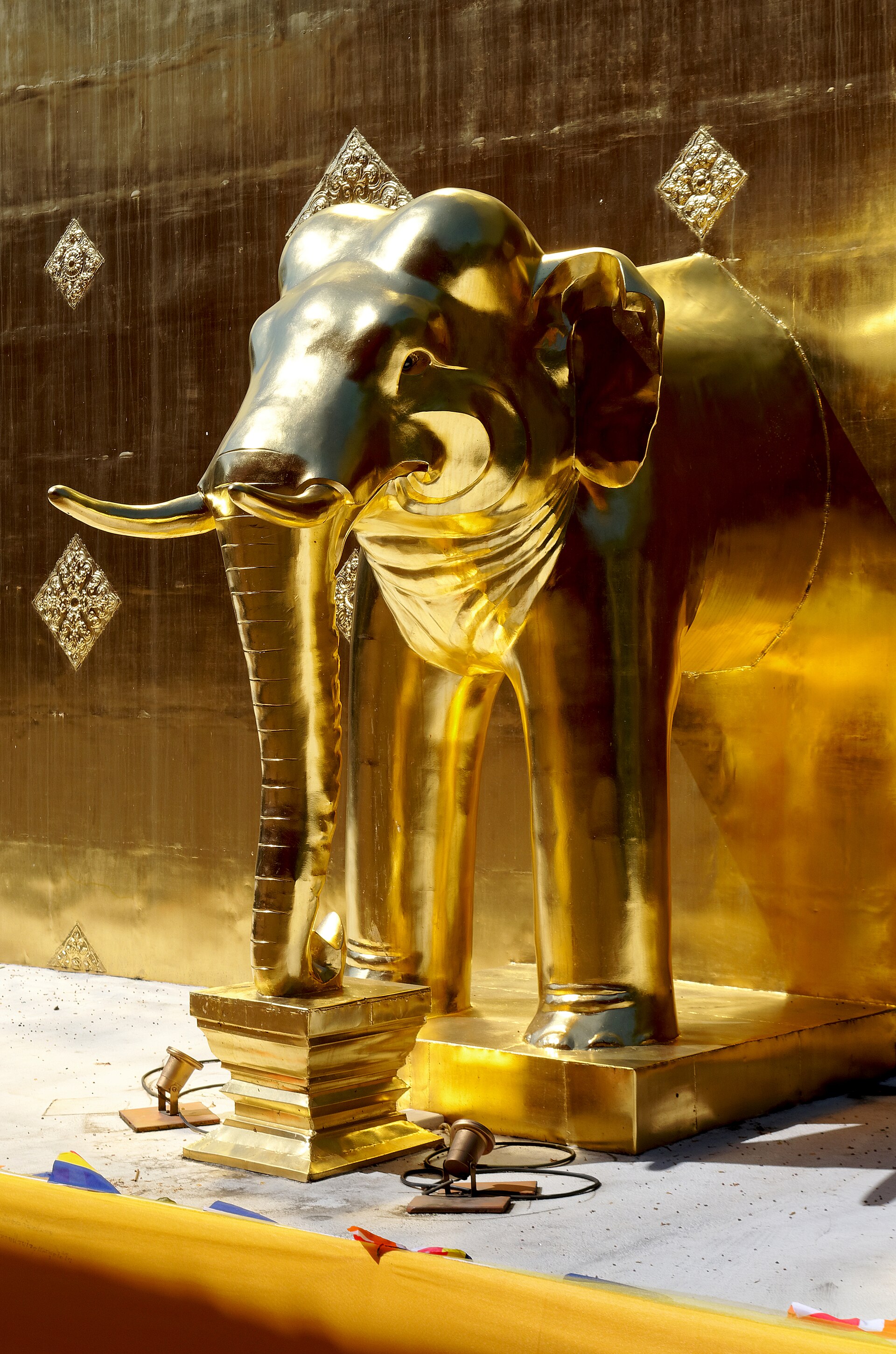
Doi Suthep — the temple that gives Chiang Mai its spiritual identity — sits on the forested slopes of Doi Suthep mountain, 13km northwest of the city at 1,073 metres above sea level. The 300-step Naga staircase (flanked by twin serpent balustrades of extraordinary craftsmanship) climbs to the temple complex, whose golden chedi (built in 1386 to house a relic of the Buddha) commands panoramic views over the Chiang Mai valley below. The city itself is visible through the trees — a reminder of how closely the mountain and the city have coexisted for seven centuries. The temple is active and genuinely sacred — monks in saffron robes move through the complex continuously, and the atmosphere of devotion is palpable even at peak tourist times.
Elephant Sanctuaries
Chiang Mai and the surrounding Mae Wang and Chom Thong valleys have the highest concentration of elephant sanctuaries in Thailand — a consequence of a 1989 logging ban that left thousands of working elephants without employment and in need of alternative care models. The ethical elephant sanctuary model (interaction without riding, natural habitat, rescue and rehabilitation focus) has transformed the experience available to visitors: spending a day at a well-run sanctuary (Elephant Nature Park, founded by Lek Chailert, is the most respected) involves feeding, bathing and simply walking with elephants in their natural habitat, observing behaviour that captive-ride operations suppress and learning about the animals' individual histories. Research carefully before booking — the phrase "elephant sanctuary" has been widely appropriated by operations that still use hooks and chains despite their marketing language.
Night Markets & Northern Food
Chiang Mai's markets are its most accessible cultural attraction: the Sunday Walking Street (Wualai Road, 4–10pm) and the Saturday Walking Street (Wualai Road) close the streets to traffic and fill them with local handicraft stalls, street food vendors and live music — the best places to find authentic northern Thai handicrafts (silverwork, carved wood, silk, lacquer) at fair prices, directly from artisans. The Night Bazaar (daily, Chang Klan Road) is more commercialised but convenient. Northern Thai food is significantly distinct from Bangkok's central Thai cuisine: khao soi (a rich coconut milk curry soup with egg noodles, the definitive Chiang Mai dish), sai oua (herbal northern sausage), nam prik noom (green chilli dip) and gaeng hang lay (Burmese-influenced pork belly curry) are all best experienced in Chiang Mai.