In This Article
Europe is home to some of the most spectacular coastline on the planet. From the pink-sand lagoons of Crete to the towering limestone cliffs of the Algarve, the variety is astonishing — and the best part? Most of these paradise beaches are just a three to four hour flight from the UK.
After months of research, hundreds of reader submissions and our own team's first-hand experience, we've compiled the definitive list of Europe's 10 best beaches for Summer 2026. Whether you're after crystal-clear snorkelling waters, dramatic scenery, or a secluded family-friendly cove, you'll find it here.
💡 Quick tip: Book early for summer 2026. Many of these beaches are close to busy resorts and hotels in the area fill up fast — especially July and August. We recommend booking at least 3–4 months ahead for the best prices.
Cala Goloritzé — Sardinia, Italy
🇮🇹 Baunei, East Sardinia
Accessible only by boat or a 2-hour hike down a rocky mountain trail, Cala Goloritzé rewards the effort with one of the most jaw-dropping seascapes in all of Europe. A towering 143-metre limestone pinnacle juts out above the beach, and the water below is an impossible shade of turquoise — so clear you can see straight to the seabed 10 metres down.
This UNESCO-protected bay has limited daily visitor numbers, which means it stays wonderfully uncrowded even in peak summer. If you're a snorkeller or freediver, this is as good as it gets anywhere in the Mediterranean. There are no sunbeds, no bars, no facilities — just pure, untouched nature.
The most popular way to visit is via a boat tour departing from the small port of Santa Maria Navarrese. Tours typically run 9am–5pm and include snorkelling stops at two or three other nearby coves. Expect to pay around €35–€50 per person.
Elafonissi Beach — Crete, Greece
🇬🇷 Southwest Crete
Elafonissi is one of Europe's most unique beaches and instantly recognisable by its blush-pink sand, tinted by crushed rose-coloured shells and coral. The beach sits on a small island connected to the main Cretan coastline by a shallow lagoon you can wade across in seconds — the water is rarely more than knee-deep in the crossing and absolutely perfect for young children.
The sea here is shallow, warm and almost impossibly vivid. On a sunny day (and in Crete in July, every day is sunny), the combination of pink sand and turquoise water is genuinely otherworldly. It regularly tops polls for the most photogenic beach in Europe — and having been there, we completely understand why.
Elafonissi is about 75km southwest of Chania and best reached by hire car or organised coach transfer from your resort. Arrive before 10am if you want to secure a good spot — it gets busy in peak season, though its sheer size means it never feels truly overcrowded.
Comporta Beach — Portugal
🇵🇹 Setúbal District, Alentejo Coast
Comporta is Portugal's best-kept secret — a 30km stretch of wild, undeveloped Atlantic coastline backed by rice paddies and pine forest, just 90 minutes south of Lisbon. It's a world away from the tourist trail of the Algarve: no high-rise hotels, no souvenir shops, just enormous stretches of fine white sand and powerful rolling Atlantic surf.
The village of Comporta itself is impossibly chic — whitewashed fishermen's cottages, barefoot restaurants serving freshly grilled sea bass, and an effortlessly stylish crowd who've been coming here for decades (it's long been a favourite of the European artistic elite). The combination of wild natural beauty and understated luxury is unique in Europe.
The sea here is Atlantic-cool even in summer (expect 19–21°C), so it's better for surfing and long beach walks than leisurely floating. But on a warm August day with the light fading and a glass of local wine in hand, there are few places in Europe more magical.
Zlatni Rat — Brač Island, Croatia
🇭🇷 Bol, Island of Brač
Zlatni Rat (literally "Golden Cape" or "Golden Horn") is Croatia's most famous beach — and its most unusual. A long, narrow white pebble spit extends 634 metres out into the vivid Adriatic, and its pointed tip shifts position with the currents, so the beach is literally a different shape from one visit to the next. It's one of the most photographed beaches in all of Europe.
The water on both sides of the spit is shallow, calm and brilliantly clear — perfect for swimming, paddleboarding and windsurfing. The Adriatic here is one of the warmest seas in Europe at 25–27°C in peak summer, making it genuinely blissful for swimming. There's a shade of blue-green to the water that photographs simply don't do justice.
Zlatni Rat is a short walk or bike ride from the pretty town of Bol, which has excellent restaurants, bars and accommodation. The island of Brač is easily reached by ferry from Split (50 minutes). Croatia as a whole is one of our top-rated destinations for 2026 — read our full Croatia guide here.
Playa de Ses Illetes — Formentera, Spain
🇪🇸 Formentera, Balearic Islands
If you want Caribbean-quality water without flying to the Caribbean, Ses Illetes on the tiny island of Formentera is your answer. The water here is so clear, so startlingly turquoise, that visitors are regularly stunned into silence on first sight. It genuinely looks like a travel brochure — except it's real, and it's a short ferry ride from Ibiza.
Formentera is car-free and only 20km long, which keeps the island wonderfully peaceful despite its beauty. Ses Illetes is a narrow peninsula of powdery white sand with shallow water on both sides — you can wade out 50 metres and still only be waist-deep. Snorkelling directly off the beach is excellent: the seagrass meadows below the surface are protected and teeming with life.
Reach Formentera by taking a 30-minute ferry from Ibiza Town. Most people combine a few days on Formentera with a stay in Ibiza — the contrast between the two islands is part of the appeal. Restaurants along the beach serve fresh seafood and chilled rosé at tables that practically touch the water's edge.
Numbers 6–10: Equally Unmissable
Our top five are extraordinary, but the beaches below are every bit as spectacular in their own right — and in many cases, considerably less crowded.
Lichnos Beach — Parga, Greece
🇬🇷 Epirus Region, Northwest Greece
Lichnos is what most people imagine when they picture the perfect Greek beach: a sweeping arc of fine golden sand, fringed by fragrant pine trees that slope right down to the water's edge. The sea is a deep, vivid turquoise and the backdrop of green hills gives it a lush, almost tropical feel that's unusual for Greece. It's 2km outside the gorgeous Venetian town of Parga — one of the most charming and underrated destinations in Greece.
Golden Bay — Malta
🇲🇹 North-West Malta
Malta's most famous beach earns its name — at sunset, the entire bay glows a warm amber gold. Golden Bay is backed by rust-red sandstone cliffs and fringed by shallow, clear Mediterranean water. Malta is only 3 hours from the UK, making it one of the easiest and most affordable European beach destinations. The island also offers some of the best scuba diving in the Mediterranean, and Golden Bay sits close to several excellent dive sites.
Praia da Marinha — Algarve, Portugal
🇵🇹 Lagoa, Central Algarve
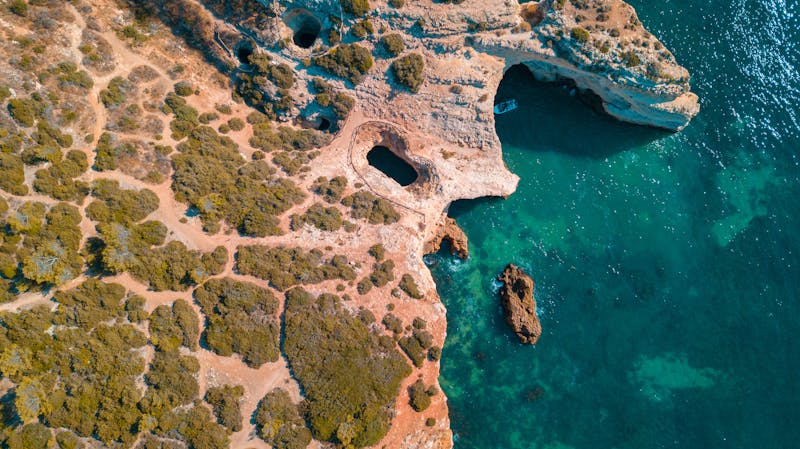
The Algarve has dozens of stunning beaches, but Praia da Marinha is the jewel in the crown. Framed by towering amber and ochre limestone cliffs, sea stacks and natural rock arches, it's one of the most dramatic beaches in all of Europe — and one of the most frequently rated "most beautiful beach in Portugal" by travel publications worldwide. The clear Atlantic water is ideal for snorkelling around the rocks and sea caves.
Sveti Stefan Beach — Montenegro
🇲🇪 Budva Riviera, Montenegro
One of the most photographed scenes in all of the Adriatic, Sveti Stefan is a tiny 15th-century island village connected to the mainland by a narrow causeway, with two pebble beaches on either side. The water here is a deep, clear Adriatic blue and the setting — medieval towers, terracotta rooftops, cypress trees — is utterly unlike anywhere else on this list. Montenegro is one of the most affordable destinations in Europe and absolutely worth adding to your radar for 2026.
Pakleni Islands — Hvar, Croatia
🇭🇷 Off the coast of Hvar Town
Just a 10-minute water taxi from the glamorous town of Hvar, the Pakleni Islands are a scattering of pine-covered islands with hidden coves and secluded beaches that feel like your own private stretch of paradise. The water between the islands is sheltered, warm and brilliantly clear — ideal for swimming, kayaking and snorkelling. Combine a few hours on the islands with an evening in Hvar town — Croatia's most stylish resort — for one of the best days in the Mediterranean.
🏆 Our Overall Verdict
If you can only pick one, Cala Goloritzé in Sardinia is unlike anything else in Europe — the combination of dramatic scenery, UNESCO protection and extraordinary water quality make it the continent's finest beach. But the truth is, any beach on this list would make for an unforgettable holiday. Europe really does have it all.
Planning Your Beach Holiday
Most of the beaches on this list are at their best between June and September, with July and August being peak season. Here are a few key tips before you book:
- Book accommodation early — hotels near popular beaches sell out 4–6 months in advance, especially for August
- Hire a car where possible — many of the best beaches (Comporta, Elafonissi, Praia da Marinha) are tricky to reach by public transport
- Arrive early in the day — most of these beaches get busy from 11am onwards; arriving by 9–9:30am makes a huge difference
- Consider shoulder season — late May, June, and September offer almost the same weather with far fewer crowds and lower prices
- Pack reef-safe suncream — several of these are protected marine areas and regular suncream damages coral and sea life
🌡️ Best time to visit: June and September offer the perfect balance — warm enough to swim comfortably (23–26°C water temperature across most destinations), fewer crowds than July/August, and prices that are typically 20–35% lower than peak season.