In This Article
Dubai has become one of the most searched winter sun destinations for UK travellers, and for good reason — nowhere else combines a 7-hour flight, guaranteed sunshine, and such an extraordinary concentration of things to actually do. It's part beach holiday, part city break, part theme park, and it somehow makes all three work together.
This guide covers everything you need for a first trip in 2026 — the best areas to base yourself, how many days to allow, honest costs, and the cultural context that makes a trip to the UAE run smoothly.
Why Dubai in 2026?
Dubai continues to expand its attractions faster than almost any other city on earth — new towers, new beach clubs, new experiences seem to open every few months. But the fundamentals that make it such a strong choice for UK travellers haven't changed: a short flight time of 6.5–7 hours, visa-free entry for UK passport holders (30 days), guaranteed winter sunshine when the UK is grey and cold, and a huge range of all-inclusive resort options that compete fiercely on price.
It sits comfortably among the UK's most in-demand long-haul destinations, and unlike many winter sun spots, Dubai delivers a genuine variety of experience — world-class shopping and dining, desert adventure, record-breaking architecture and beach time, all within a 45-minute drive of each other.
🛂 Visa note: UK citizens receive 30 days visa-free entry to the UAE on arrival — no application or paperwork required. Just make sure your passport has at least 6 months' validity remaining from your date of entry.
A passport and document wallet keeps your passport and booking references together in your hand luggage for airport arrivals and hotel check-in.
Best Time to Visit
Dubai's climate is the single biggest factor in planning your trip — the difference between visiting in January and visiting in August is dramatic.
☀️ Winter (November – March) — BEST
Warm, sunny and comfortable at 24–28°C. Ideal for the beach, desert safaris and exploring on foot. This is peak season, so book resorts and popular attractions like the Burj Khalifa well ahead, especially over Christmas, New Year and Easter.
🌤️ Shoulder Season (April, October)
Still pleasant at 28–34°C, with noticeably fewer crowds and lower resort prices than peak winter. A good compromise if you want to avoid the busiest months without the extreme summer heat.
🔥 Summer (May – September) — AVOID BEACHES
Brutally hot, with temperatures regularly exceeding 40–45°C and high humidity. Outdoor activity is largely limited to early morning or evening. That said, hotel and flight prices drop sharply, and Dubai's malls, indoor ski slope and aquariums remain fully air-conditioned escapes.
💰 Best Value: Late April & Early October
The narrow windows just either side of summer offer the best balance of manageable heat and meaningfully lower prices — often 30–40% cheaper than the December–February peak.
💡 Planning tip: If your priority is the beach and outdoor desert experiences, stick firmly to November–March. If you're mainly there for shopping, indoor attractions and a Burj Khalifa selfie, Dubai works well even in the height of summer — and you'll pay significantly less for your hotel.
Downtown Dubai & Burj Khalifa
Downtown Dubai — The Modern Icon
🇦🇪 Central Dubai — the city's showpiece district
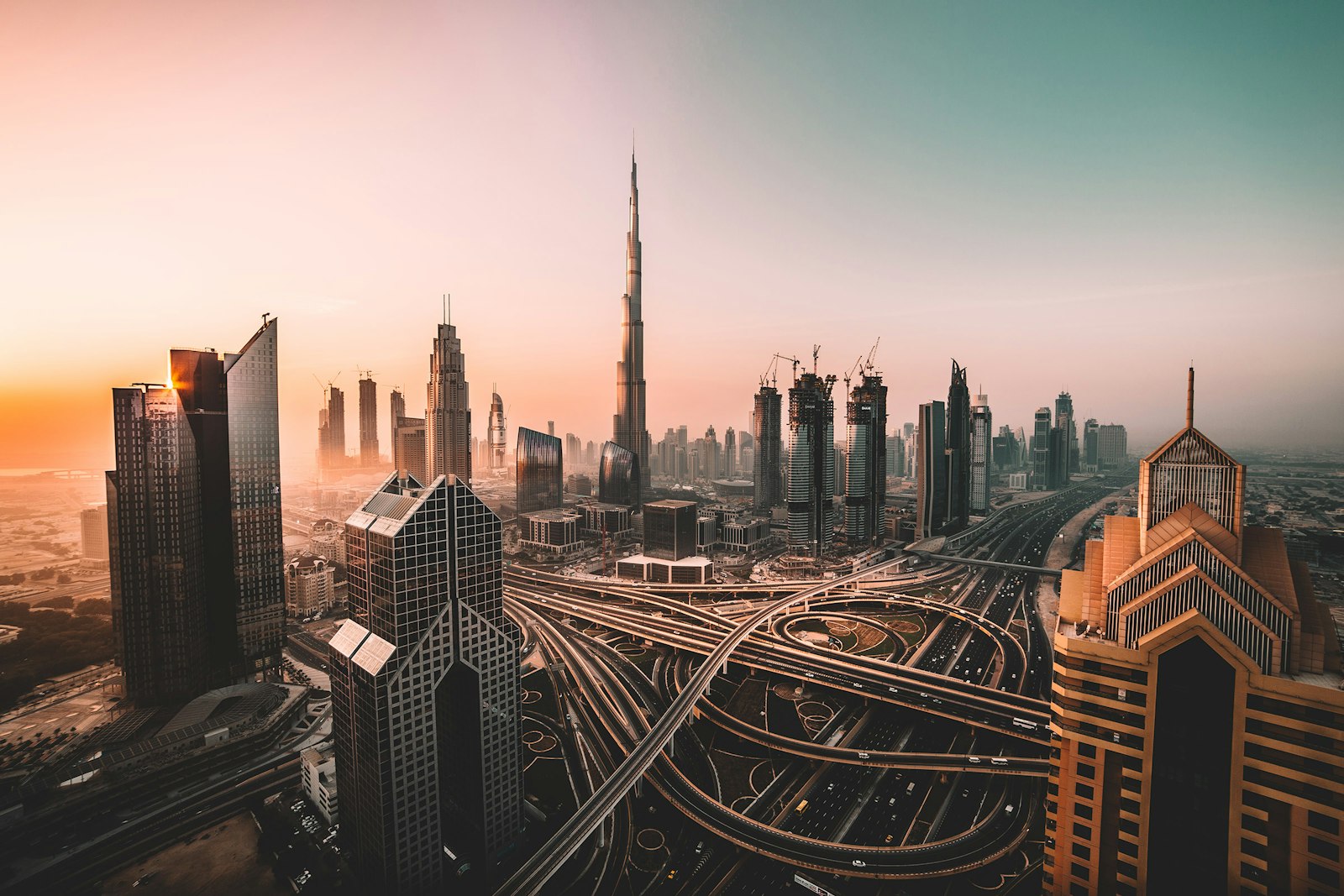
Downtown Dubai is built around the Burj Khalifa, the world's tallest building at 828 metres. The "At the Top" observation deck on floor 124 (or 148 for the premium Sky experience) delivers a view unlike anywhere else on earth — book tickets online in advance, and choose a sunset slot for the best light over the city and desert beyond.
Directly below sits the Dubai Mall — genuinely one of the largest shopping centres in the world, with an aquarium, ice rink, and the Dubai Fountain outside, which puts on a choreographed water and light show every 30 minutes in the evening, set to music and perfectly framed by the Burj Khalifa behind it. It's free, spectacular and shouldn't be missed.
Dubai Marina & JBR
Dubai Marina & Jumeirah Beach Residence
🇦🇪 Waterfront district — best for beach + city combined
The Marina is a striking man-made waterway lined with skyscrapers, best experienced on the 7km Marina Walk promenade or from a dhow dinner cruise at sunset. Directly adjacent, JBR (Jumeirah Beach Residence) gives you a proper stretch of public beach with a lively boardwalk of restaurants, bars and beach clubs right behind it — arguably the best area to base yourself if you want beach and nightlife within walking distance of each other.
This is also where you'll find some of Dubai's best beach clubs, several with day-pass access even if you're not staying at the attached hotel — a good way to sample a five-star pool and beach setup without paying five-star room rates.
If you will use JBR public beach as well as your hotel's pool, pack a compact beach towel so you have your own towel for days out.
Palm Jumeirah
Palm Jumeirah
🇦🇪 The man-made palm-shaped island, visible from space
The Palm Jumeirah is Dubai at its most audacious — a palm-tree-shaped island built entirely from reclaimed land, home to some of the city's most exclusive resorts, including the iconic sail-shaped Burj Al Arab nearby on the mainland coast. This is where to splash out on a genuine five-star beach resort stay, several of which offer private beach access and world-class spas.
Even on a budget trip, it's worth a visit — the Aquaventure Waterpark at Atlantis The Palm is one of the best in the world, and The View at The Palm observation deck gives you a clear look at the island's full shape from above.
Old Dubai & the Gold Souk
Old Dubai — Deira & Al Fahidi
🇦🇪 Along Dubai Creek — the city's historic heart
It's easy to forget Dubai has an "old town" amid the skyscrapers, but the area around Dubai Creek is where the city began. Cross the creek on a traditional abra (wooden water taxi) for less than a pound, and wander the Gold Souk and Spice Souk in Deira — a genuinely atmospheric contrast to the glass towers a few miles south. The Al Fahidi Historic District preserves traditional wind-tower architecture and houses several small museums and art galleries in restored courtyard buildings.
This is also the best area to try authentic Emirati food rather than the international dining that dominates the newer districts — look for dishes like machboos (spiced rice with meat or fish) and luqaimat (sweet dumplings drizzled with date syrup).
Desert Safari
Desert Safari
🇦🇪 The Arabian Desert — 45–60 minutes from the city
No Dubai trip is complete without a trip out into the desert. A typical evening desert safari includes dune bashing (a thrilling 4x4 ride over the dunes), a camel ride, sandboarding, and a traditional Bedouin-style camp dinner with live entertainment under the stars. It's touristy, but genuinely good fun and a total change of pace from the city.
For something calmer, a sunrise or sunset hot air balloon flight over the desert is spectacular and a favourite with couples. Book any desert experience through a reputable operator with good reviews — quality varies significantly between companies at similar price points.
Getting There from the UK
Dubai International Airport (DXB) is one of the busiest and best-connected airports in the world, with excellent links to the UK.
Direct Flights
Emirates, British Airways, Virgin Atlantic and Flydubai all operate direct flights from multiple UK airports — including Heathrow, Gatwick, Manchester, Birmingham, Glasgow and Newcastle — often several times daily. Flight time is approximately 6.5–7 hours, making Dubai genuinely accessible from almost anywhere in the UK without a connection.
✈️ Best time to book: Book 3–4 months ahead for winter travel (December–February), when demand and prices peak. Expect to pay £350–500 return in peak season, dropping to £250–350 in summer shoulder months. Emirates and Flydubai regularly run competitive fare sales — worth signing up for airline newsletters if your dates are flexible.
Getting Around Dubai
Dubai is a spread-out, car-oriented city, but getting around without hiring a car is straightforward.
Dubai Metro
The Dubai Metro is clean, efficient, air-conditioned and connects the airport to Downtown, the Marina and most major attractions. A Nol Card (the rechargeable travel pass) covers the metro, buses and trams — top up at any station and journeys typically cost less than £1.
Taxis & Ride-Hailing
Taxis are plentiful, metered and reasonably priced — a cross-city journey rarely costs more than £10–15. The Careem and Uber apps both work well in Dubai and are often the easiest option, particularly for reaching the Palm or desert camps where metro coverage doesn't extend.
Budget Breakdown
Dubai has a reputation for being expensive, but a well-planned trip is more affordable than most people expect. Here's what a realistic one-week trip costs at different budget levels:
| Category | Budget (£) | Mid-Range (£) | Comfort (£) |
|---|---|---|---|
| Return flights (from London) | £280 | £400 | £650 |
| Accommodation (7 nights) | £350 (3-star hotel) | £700 (4-star hotel) | £1,750 (5-star resort) |
| Food (7 days) | £140 (local & casual) | £280 (mix of dining) | £560 (fine dining included) |
| Transport (metro/taxis) | £40 | £70 | £150 (private transfers) |
| Attractions (Burj Khalifa, desert safari, etc.) | £100 | £200 | £400+ |
| Total per person (7 days) | ~£910 | ~£1,650 | ~£3,510 |
💡 Money-saving tip: Dubai's all-inclusive resort deals — particularly along JBR and the Marina — can work out significantly cheaper than paying for food and drink separately, especially if alcohol is part of your holiday. Compare a few all-inclusive packages against a self-catered mid-range hotel before booking; the maths often favours all-inclusive.
Cultural Tips & Etiquette
The UAE is a Muslim country with a legal and cultural framework that differs from the UK in some important ways. A little preparation goes a long way:
- Dress modestly outside tourist zones — shoulders and knees covered is a safe default in malls, souks and public areas. Beachwear and swimwear are fine at hotel pools and beaches, but not appropriate elsewhere
- Public displays of affection beyond holding hands are best avoided — kissing and embracing in public can, in theory, lead to legal issues, even for tourists
- Alcohol is legal in licensed hotels, bars and restaurants, but drinking in public outside these venues, or being visibly drunk in public, is illegal
- Ramadan changes daily life significantly — eating, drinking and smoking in public during daylight hours is prohibited for everyone, not just those observing. Many restaurants remain open but screened from view. Check the dates before booking if you'd rather avoid it, or embrace the unique atmosphere of Iftar (the evening meal) if you don't mind adjusting your routine
- Photography — always ask before photographing local people, especially women, and avoid photographing government buildings, military installations or ports
- Friday is the main day of prayer — some souks and local businesses open later or close for a period around midday prayers
- Tipping — 10-15% is standard and appreciated at restaurants, though many already add a service charge; check your bill first
⚠️ Important: The UAE has strict laws around drugs, with zero tolerance and severe penalties — this includes trace amounts and certain prescription medications that are legal in the UK but restricted in the UAE. Check the UAE's approved medication list before travelling if you take regular prescription medicine, and always carry it in original packaging with a copy of your prescription.
🏆 Our Verdict
Dubai delivers an unusually complete holiday in a short flight time — beach, city, culture, adventure and genuine luxury all within reach of each other. It rewards a little planning around the heat and cultural norms, but for UK travellers wanting reliable winter sun without the long-haul commitment of Southeast Asia or the Caribbean, it remains one of the strongest options available in 2026.
Comments 0